Blog

Showing posts with label Publishing. Show all posts

Answering a Few Questions About Publication


By Jody Hedlund, @JodyHedlund

Recently I returned from a national writers’ conference. One of my favorite things to do there was talk with aspiring writers and answer any questions they had about publication and being an author.

Even though I’m home now, I still love the opportunity to answer questions, most of which come via emails. While I don’t always have time to write back, sometimes I answer the questions here on my blog, especially when they’re the kind of questions other writers might have too.

Recently I got just such an email from Hannah, one full of lots of great questions.

Hannah said: I am currently an English major who would love to have a career in writing novels. I would love it if you could share how you got started in the writing world and became successful. How long did it take before you first got published? How long does it generally take for you to write a novel? Do you work for someone who gives certain deadlines or are you self-employed and work at your own pace?

1. How long did it take before you first got published?

It took me approximately 7 years (nonconsecutive) from when I first started writing seriously as an adult to when I got my first book contract. During those years, I read every writing how-to book I could find, and I wrote five practice novels that now collect dust in a closet and will never see the light of day. My sixth book became my debut novel.

The number of years and practice books it takes will vary from writer to writer. BUT what won’t vary is the NEED TO LEARN. Every writer has to take the time and do the hard work of learning the craft of writing by reading technique books, practicing, getting critiques, and honing their skills.

All too often nowadays with the ease of self-publishing, I see too many writers skip the hard work of learning and practicing. Whether going the traditional or self-publishing route, a writer won’t find success without taking the time and work necessary to become skilled.

Once a writer is consistently getting feedback (from critique partners or editors) that their work is starting to look ready for publication, my advice is to seek out agents and writing contests. I made my big break into traditional publication by finaling in a prestigious writing contest. After my final, I re-contacted the agent who already had my manuscript in her slush pile. She offered me representation a few days later. A few months after that I had a three book deal.

2. How long does it generally take for you to write a novel?

After writing close to 30 books and having about 25 of them published, my writing muscles are much stronger now than when I first started. I like to compare writing to running. When a person first decides to take up running, they lumber down the street and can hardly go a block without having to stop for a break. After years of practice and running consistently, they can often go many blocks without needing to stop. Maybe they’ve even worked up to running marathons.

Writing works the same way with lots of slow lumbering, often much fumbling, and eventually going longer with stronger output. I started by writing 500 words a day during my kids’ nap-times. It took me a year to complete one book. That was all I could manage as a busy (and exhausted!) mom. Now, after years of writing, I can complete the first draft of a novel in 8 to 10 weeks. My kids are teenagers and more independent, and I’m in a season where I can devote more time to my writing.

3. Do you work for someone who gives certain deadlines or are you self-employed and work at your own pace?

With my traditional publishers, I’m under contract to write a certain number of books in a specific time period. Generally for me, that means I turn in a book every 6 to 9 months. During contract negotiations, my publisher gives me deadlines for when I need to turn in the first draft and also with the various stages of editing.

For my indie books, I don’t have any deadlines, although I do try to work carefully around my traditionally published books so that releases don’t conflict with each other. Even without strict deadlines for my self-pubbed books, I’ve still found it very helpful for my productivity to establish my own goals and publication schedules. I try very hard to stay on track with the schedule, especially so I can remain timely for the editors, cover designer, beta readers, etc. who are a part of my self-publishing process.

All that to say, I approach my writing career in a business-like way. Not everyone does nor do they need to. It’s just what works for me and my personality. I like to establish yearly goals (sometimes even plotting out my writing and publishing schedule for a couple of years). Then I know what I can fit in and where.

Your turn! How long have YOU been writing? What is YOUR writing process like and how long does it take YOU to complete a novel? 

The Key to Knowing if You're Ready for Publication


By Jody Hedlund, @JodyHedlund

My oldest is graduating from high school. So I'm in the midst of planning a big graduation party for him. I'm not super creative when it comes to parties (apparently I use up all my creativity in my stories!). So our party will be pretty standard without a lot of bells and whistles--in the back yard with coolers of soda, tables of dessert and appetizers, etc.
 
My graduating senior!
One of the most asked questions I get about my son's graduation is, "Are you sad to see him go?" Since I try to be transparent, I usually respond, "No, actually I'm ready and so is he."

I've spent 18 years of my life preparing him for this point. I've poured out my heart, energy, time, resources, and many times even my tears into raising him. Was I perfect? Absolutely not. I made many mistakes.

Let's face it, parenting is confusing and hard and filled with uncertainties. We ask ourselves over and over as we set boundaries and make decisions, "Am I doing the right thing?"

We wouldn't question ourselves so much if we didn't love our children deeply and have their best interests at heart. We teach, train, and discipline them with the hope that one day they'll be able to stand on their own two feet with all the values, skills, and character qualities that they'll need to take their place in the world.

Nevertheless, no matter how hard we try to be good parents, our children are their own individuals with their own minds, dreams, and plans. They eventually have to take flight. And eventually we have to let them.

As writers, we face the challenge of letting go of our stories. We pour our hearts, energy, time, resources, and even tears into our books. We watch our stories take shape and grow. We're filled with uncertainties and ask ourselves continually if we're doing the right thing. We subject our stories to feedback and criticism with the hope that they will one day have what it takes to stand on their own.

Just like parenting, there are some writers who can let go, maybe even too easily. And others of us perhaps cling too tightly to our stories. How do we learn to have a healthy balance of not seeking publication too soon but also not letting fear hold us back from taking the next step?

The key in writing, like parenting, is: Preparation.

I've done all I  can to prepare my son to leave home. I've attempted to teach him to cook, do laundry, clean, manage his money, be responsible, have manners, etc. Notice I said, attempted. He's definitely not perfect (or even close to it!) in all areas. He has a lot of room for growth, and don't we all?

However, in spite of his short falls, he's a great kid, determined, and a hard worker. He's equipped to take the next step.

If we're struggling to know whether we're ready for publication, we need to ask ourselves: Have we spent enough time preparing? Maybe we don't need 18 years, but certainly we can't expect to be ready overnight. Have we learned necessary writing skills and techniques? Have we practiced them over and over? Have we taken the time and energy to learn all we can about the industry?

Maybe we won't be perfect. Maybe we still have room to improve, after all we're all still growing. But if we've attempted to do all we can to learn and grow, then we're likely ready to take the next step in our writing career.

My encouragement for writers seeking publication is this: We shouldn't rush to publish too early before we're ready. It may lead to undue frustrations which can take away the joy of writing. But we also can't let fear hold us back. At some point, after we've put in the time and effort, we can wisely and cautiously begin the process of seeking publication.

With enough preparation, hopefully we'll be able to say with confidence, "I'm ready and so is my book."

How do you think writers can tell if they're ready for publication? Are you rushing in to publication too soon? Or are you letting fear hold you back?

3 Areas That Suffer in Quantity-Driven Writing


By Jody Hedlund, @JodyHedlund

Once upon a time, most writers could survive by writing just one book a year. But in the changing landscape of the publishing industry, with lower advances and sales, writing one book a year isn't financially feasible for many.

With the ease of e-publishing, more and more writers are able to publish their books. But unfortunately the reading population hasn't gained as many new readers at the same rate as the number of new authors. Thus, among the influx of writers, the publishing pie has been cut into smaller and smaller slivers so that the majority of writers are earning significantly less.

As writers earn less, one of the solutions is to publish more with the hope of increasing earnings with each book out there. Obviously an author has the potential to make more money with five published books versus one.

In addition to hoping to increase earnings, writers are moving toward quantity writing because having backlists has become one way to maximize marketing. Many writers offer older books for a reduced price (or even for free) with the hope of gaining new loyal fans who buy current releases.

With so many authors and books available, it's all too easy for readers to finish our book and then find another author or book that catches their attention. Consistently having books to put into our readers' hands keeps our names fresh in their minds amidst the growing competition.

Whatever the case, the trend over the past couple of years has moved toward quantity publishing and long tail marketing. Among indie authors I know, it's not uncommon to see them releasing a new book every few months.

While the nature of traditional publishing may not allow for authors to put out books quite so frequently, many are self-publishing alongside their traditional book deals to allow for more quantity.

In this modern era of quantity-driven writing and publishing, however, there are a few pitfalls. I've had to be careful not to fall into the pitfalls myself.

1. Skimping on Research:

Research is an integral part of the writing process for most writers. Whether we write historicals, thrillers, suspense, or contemporary romance, we all have areas within our stories to research.

If we're striving to add some freshness to our story and move beyond the mundane of what most people already know, then we have to seek out new occupations, new locations, or new issues that go beyond the ordinary.

But of course, it takes time to investigate issues, interview experts, read research books, or even take trips to do more in-depth hands-on learning.

When pressed for time, research often suffers and consequently so does credibility, passion, and the thrill of unique and fresh material.

2. Skimping on Depth:

The age old question still arises: quality versus quantity? And is it possible to write fast and prolifically and still have stories that are well-plotted with characters that have clear arcs and settings that are full of sensory details?

Of course, I don't think fast writing equates poor writing. Many writers who have been using their creative muscles for a while, have honed them, learned writing techniques, and are able to produce large amounts of beautiful prose in short amounts of time.

But on the other hand, prolific writing doesn't always allow writers the time to reflect on issues within stories, to add more twists, to create more suspense, or to take characters deeper. In the rush to produce, writers may sacrifice the contemplation and mulling process that can take a story from good to great.

3. Skimping on Editing:

Often the first place writers cut corners on the road to publishing is with editing. Sometimes writers may not want to take the time to let the story have a resting period in order to gain objectivity. They may finish the writing and jump immediately into editing the book.

Usually our books need to be self-edited multiple times. One or two read-through's is never enough. But if we're in a rush, we may cut out some of the nit-picking or we may decide not to rewrite a troublesome spot.

Other writers may not want to pay the cost for a good content AND line edit. They may pay for one and neglect the other. Or they simply may be naive enough to think they can go it alone (or perhaps with the help of a critique partner or two).

My Summary: While there's nothing wrong with quantity writing, we all need a reminder now and then (including myself) not to sacrifice too much for the sake of getting our stories out there. In the end, quality still trumps quantity in building loyal and happy readers.

What about you? What are some of the pitfalls (or positives!) you've noticed about quantity-driven writing?

9 Lessons I've Learned So Far About Writing & Publication


By Jody Hedlund, @JodyHedlund

At the start of this new year, like many of you, I took a little bit of time to reflect on my life. Often, the inner reflection of where we've been provides the stepping stones for the future. We can't climb higher without building upon what we've already learned.

I've had quite the journey with my writing career over the past five years. I've come a long way and experienced a lot. As I prepare for another year of continued growth, I took some time to review and came up with 9 lessons I've learned:

1. Working our writing muscles regularly leads to increased productivity. In 2013, I wrote 4 novels. If someone had told me five years ago that I'd EVER be able to write 4 books in one year, I'd have laughed.

But what I've learned is that writing is a lot like marathon training. We can't expect to start off running 26 miles. We work our way up to it with regular workouts and continually challenging ourselves beyond our comfort zone. If we do the same in writing, our muscles become honed and strong and capable of doing more than we thought possible.

2. We can't be afraid to try new types of writing. The past couple of years of upheaval in the publishing industry have taught us all that everything is changing. Nothing is certain. And if we hope to stay afloat, then we can't let the past ways of doing things be the yoke that sinks us.

Instead we have to adjust and be willing to think outside the box. Whether we try our hand at e-novellas, e-shorts, or even a new genre, this is the age of experimentation.

In addition to 4 novels, I also wrote an e-novella last year. It will release in the fall as a way to help promote my upcoming lighthouse series. Will the e-novella help? Maybe. Maybe not. But we can't get stuck in old ways of thinking in this new era.

3. Indie and hybrid publishing are options all writers must consider. It's most definitely something I've considered and will do at some point. Those who are successful at it have worked hard, done their homework, and are savvy about the process.

4. Traditional publishing is still very viable and important. This past year, I signed another 3 book contract to continue with my publisher for two main reasons. First, my publisher is still able to get my print books in brick and mortar stores and in foreign print. And secondly, their involvement in editing, cover design, and marketing frees me up to do more of what I love–the writing.

5. No matter our publishing choice, there isn't a magic elevator to success. As I brush shoulders with many writers both indie and traditionally published, I realize one thing is true–neither option brings automatic success. Whichever way a writer decides to go, the uphill climb takes time and lots of hard work.

6. Tenacity and perseverance are more important than ever before. I've seen many writers publish one book (either traditionally or self) and then stop there. Perhaps they didn't have the success or sales they counted on. Perhaps no other deals were forthcoming. Whatever the case, I've seen many writers fall by the wayside.

In today's market, clinging tightly to our dreams is more important than ever. We can't let one bad sales experience derail us. We have to persevere to the second or even third book. And if one method of publication isn't working, then maybe it's time try new things (mentioned in point #2) to give our career a jump start.

7. Social media has limited effectiveness for marketing. While social media has been touted as the "new marketing" tool for writers, I've come to the conclusion that it has limited reach–even when done "right."

There's a "ceiling" most of us hit no matter how many followers or friends we have. So while social media has some benefits, the best marketing is the volume of works we can make available to our readers.

8. The long tail is becoming an important source of revenue. As I recently talked through this phenomena with my editor, I was struck again how much things have changed. When the shelf life of a book used to be six months to a year, now an author's old titles sell for much longer.

The internet and the visibility of all our books (on Amazon, Goodreads, and even our websites), keeps the breath of life flowing through them. And we're able to use those backlists to bring attention to current releases (like my publisher is doing right now by offering the ebook of my first book The Preacher's Bride for free).

9. Passion and the power of the story have to remain the driving fuel of the writer's life. As I recently finished my novella, I was reminded again just how fun writing is, especially when the story morphs into something more than you planned. Nothing compares to the creative process and the joy of bringing a story to completion.

Passion, my friends, must remain the bedrock of our writing. If we lose our passion for story-telling, then why bother?

What's the biggest lesson you've learned lately about writing and publication?

Why Voice Is Becoming More Important in Today's Market


By Jody Hedlund, @JodyHedlund

The explosion of self-publishing has revolutionized the book world. There are more books available now than ever in the history of the world. As I browsed articles about the numbers of books being published, I saw statements like:

• Bowker: "The number of self-published books is up 287% since 2006"

• Bowker: "Self-Publishing Sees Triple-Digit Growth in Just Five Years "

• Forbes: "There are somewhere between 600,000 and 1,000,000 books published every year in the US alone, depending on which stats you believe. Many of those – perhaps as many as half or even more – are self-published."

Obviously, the latest statistics for 2013 are yet to be determined. But I can only imagine that the growth has continued at a mind-blowing rate. At least it seems that way from my perspective. Everywhere I turn friends, acquaintances, and even complete strangers are promoting their newly released self-published books.

I've heard publishing professionals call this phenomena of growth a "glut of publishing." The glut isn't limited to just self-published books. The traditional market is swamped too.

All of us, no matter our publication venue, have experienced firsthand just how difficult it is to get our books noticed, stand out, or build a platform among the many others clamoring to do the same.

It's not enough to simply have a riveting, well-written, page-turning story. There are plenty of excellent books that end up getting lost in the myriad mountain of published books.

I mentioned in a previous blog post that I think being on the forefront of a new genre can help push an author from obscurity to stardom. But what about those of us who are content to stick to the genre we already love and know? Are we hopelessly doomed to drown in obscurity?

Is it possible to stand out within our genres of choice? Especially when the genre is already flooded with so many talented authors?

As I've pondered this "glut" and what it means for myself and all authors, I realized that VOICE is becoming more critical to the modern author. 

An author's narrative voice is our unique way of stringing words, sentences, and thoughts together that resembles (perhaps echoes) the qualities of our personality, inner being, and values. Some writers develop and hone their voices over time. Others seem to come into writing with a distinct voice already there.

Whatever the case, our individual style, unique spin, and special way of putting thoughts onto paper has always been important. But nowadays, in order to stand out among the masses, voice has become even more important.

Recently I chatted with a friend who shared concerns that aspects of her unpublished novel had similarities in setting and plot to my recent release, Rebellious Heart. When she wrote her book, mine hadn't yet been release. So she had no idea our stories would overlap. But then after she read mine, she spotted many similarities. She wondered if publishers or readers would now be interested in hers, or if they'd reject it because it's already been done.

I think that's a common concern for many of us. What if our stories, plot, characters inadvertently resemble something already in print or hitting shelves?

The fact is as hard as we try to find unique plots and characters, our stories may end up sharing common threads with other books. Readers don't seem to mind. After all, whole genres are born this way. Readers fall in love with a certain topic and want more books about that (think Amish or Vampire).

Sometimes we can't avoid the similarities. Maybe our book is the thousandth book set during the American Revolution involving the founding fathers. But, when we tell our stories in our VOICE, with our fresh flavor, we're still able to give our readers something new and different.

The more your VOICE shines through in its beautiful unique way, the easier it will be for your book to stand out from all the others that are like it.

If we don't spend time developing and practicing our voice, we're more likely to end up with a cookie-cutter book–one that sounds like too many others. As I said before, it's hard enough to stand out from other books even with a fresh voice, much less one that blends in.

My challenge to myself and to you, is that we cultivate our narrative voices, get to know who we really are, and then let our voice pour forth in the words we write on the page.

How about you? Are you discouraged with how hard it is to stand out in today's crowded book market? Do you think having a unique, fresh voice is one way to help books rise above the masses?

Checklist For Determining If Your Book Is Ready to Fly

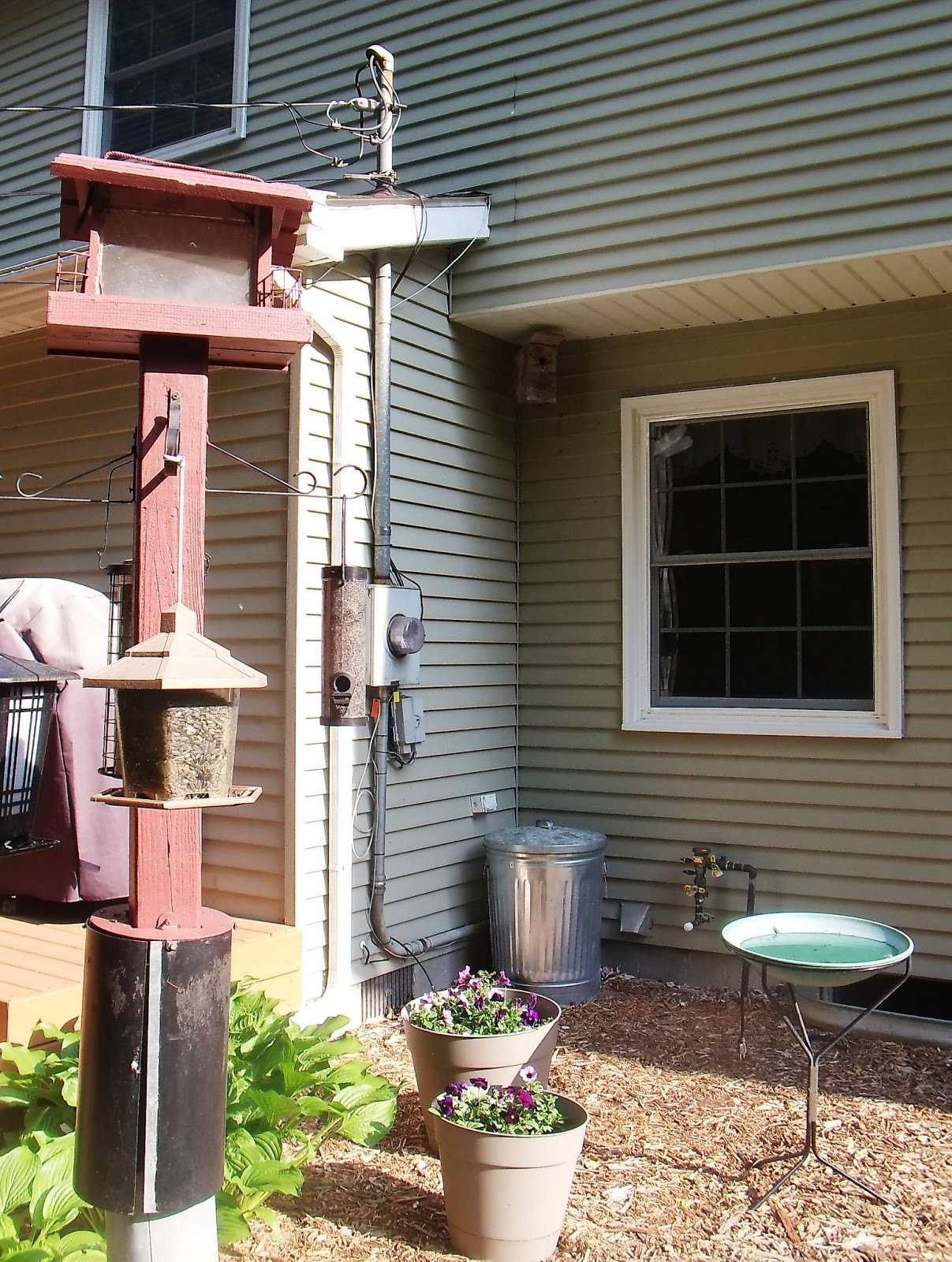
Can you spot the bird house? :-)
By Jody Hedlund, @JodyHedlund

We have a bird house hanging right outside our kitchen window. My husband built it with my son long ago, and they hung it up with pride and expectation.

For many years the bird house carried a vacancy sign . . . until finally a family of house sparrows decided to take up residence. Now they're the lucky owners of the best bird house in town. Their home is snug in a corner, sheltered from wind and rain. And right outside their tiny door is a heated bird bath and half a dozen feeders. What more could a bird ask for?

For a few weeks we watched the momma and daddy sparrow squeeze dead grass and dried weeds into their doorway as they slowly crafted their nest. Then when all of the fluttering in and out finally stopped, we decided momma bird was probably sitting on her nest.

Not many days later when we opened our kitchen window, we heard a chorus of cheeps. The daddy flitted back and forth from the feeders to his home. Every time he reached the doorway, the newly hatched babies inside would chirp with excitement.

As we watched, we were amazed at the amount of work those babies required! The daddy and eventually the momma spent most of their time flying back and forth feeding and nurturing their babies. As the creatures grew, they would pop their heads out the door and open their beaks wide, clamoring for even more nourishment.

After a week or two of constant tweeting and fluttering outside our window, suddenly one day, we awoke to silence and stillness. The birds were gone, already almost full size, ready to survive on their own.

We as writers have a lot in common with the birds! 

Most of us spend weeks building the nest–researching, plotting, and developing characters. Then we spend an inordinate amount of work nurturing our stories and crafting them with loving dedication during the first draft, just like the momma and daddy birds. Finally we help them mature with edit after edit.

But how do we know when we should push them from the nest into the wide world of agents, editors, or self-publishing? After all, we DO eventually have to let them try their wings. We can't hold them in the birdhouse forever.

How do we know when our books are ready to fly?

Over the years, I've heard many writers lament about sending their books out too soon. Agents often remark that one of the top reasons for sending a rejection is because the writing ability is not strong enough. And over the past year or so, I've read articles written by self-published authors who regret launching their books before they were ready.

Recently, I cleaned out a closet and came across the first five novels I wrote. All it took was one glance at the first page of my first one to see large paragraphs of backstory dump and setting description to know that baby had never been ready to fly. Thankfully, I never pushed it out.

With each book I wrote, I continued to study the craft of writing. And with each book, I continued to practice all of the things I was learning. But none of the books ever reached a truly mature stage. They were all just part of the necessary process of growing.

Sometimes we can do everything possible to nurture our writing, read all the writing craft books, take online courses, attend writing conferences. But ultimately, even with all of the food we shove at our writing, growth is slow and happens over time. We, like birds, have a growth curve, can only ingest so much at one time, and have to allow for a natural progression.

Maturation in our writing is not something we can rush. After all the hard work, it's easy to get excited about the next stage–seeing our babies fly. But it hurts when we push them out only to see them fall flat, get stepped on and rejected, or garner poor reviews.

So how do we know when our writing is ready to fly?

Here's my short checklist:

1. Know the techniques of writing inside and out. Make sure we have a well-crafted story that applies all of the various writing essentials.

2. Nurture our story-telling skills. Read lots of books in our genre. Spend time analyzing what makes a story work and what doesn't.

3. Allow practice to mature us. Write a couple of books to completion. There's nothing like writing a book from start to finish several times to help us grow.

4. Send a manuscript to a critique partner /group or professional editor. Good feedback from a skilled writer/editor can help us see how we're doing. Sometimes entering a contest can give us an idea of where we stack up against our competition.

5. Make a trial run. Send a query to an agent or publisher. Garnering their interest can often show that we're on track. On the flip side, however, a rejection doesn't mean we're terrible. It's often difficult to distinguish if a rejection means we're not ready or if the agent simply wasn't interested (for a hundred and one various reasons).

What do you think? Have you ever sent your work out too soon? How do you know when your work is ready to fly? 

Why Are We Stepping On Each Other's Toes?


By Jody Hedlund, @JodyHedlund

Lately I've noticed a lot of toe-stepping going on around the internet. And at the same time writer's are speaking their minds, many are quick to take offense to something written on Twitter or in a blog post, especially when it comes to self-publishing versus traditional publication.

Obviously, those who are happy with traditional publication, are quick to defend their position. And those who are self-publishing are also quick to promote the positives of their choice.

My agent recently wrote a post: Will My Publisher Let Me Self-Publish Too? I understood completely where her post was coming from, because I have contracts with non-compete clauses and it's not as simple as telling your publisher to take it out or take a hike

Even though ideally, I'd like to remove the non-compete, I have a great relationship with my publisher, love my editors, and have had a very positive traditional publication experience. I have no desire to burn bridges with anyone in the industry. But I'm also hopeful for changes and compromises that can help benefit everyone involved.

Unfortunately, Rachelle got a lot of criticism for her post, mainly from self-published authors. In reading the comments, I could see that some writers had no idea of the reality and complexity of the traditional publication situation (particularly in regard to non-compete clauses) mostly because they haven't been in the situation where they have one that they're struggling to negotiate. They were making blanket statements about issues they didn't fully understand.

But I'm guilty as charged. I've made statements about self-publishing when I have no idea about the reality and the complexity of the self-publishing situation. My comments come out of a collection of thoughts and presuppositions based on what I've read, instead of personal experience.

Until we've walked a mile in the shoes of someone else, we really have no business passing judgment, do we? There are times when I think it would be very helpful for me to self-publish something just so that I can understand where others are coming from. Then I could better empathize, be less judgmental, and be more knowledgeable when I make comments.

Shouldn't we all be striving to understand one another instead of coming across as critical, condescending, or demeaning?

The truth is, all of us writers whether we go the traditional route, self-publish, or both are in this business together. We can cheer each other on, no matter what route we take. Self-published authors don't have to scoff at traditionally published for settling for less money or control. And traditionally don't have to put down self-published books as subpar.

Obviously there are subpar books in both categories, just as there are poorly paid authors in both categories. Neither, in and of themselves, are the panacea for success.

Success knows no boundaries to a particular kind of publication. No matter the route we take, success comes to those who persevere in writing one good book after another, time after time, year after year.

I'll end my rant for today with a plea: Can we please stop stepping on each others' toes and just enjoy being friends? And if for some reason, our toes do get stepped on occasionally, perhaps we have to resolve not to take it so personally.

Have you noticed toe-stepping with the whole self-publishing versus traditional publishing debate? How have you handled it?

Why Writers Shouldn't Rush Into Publication

By Jody Hedlund, @JodyHedlund

Spring has arrived in central Michigan where I live. Finally! It's come with lots of storms and flooding. But interspersed between the rainy days are a few that are perfect and sunny.

When we have those one or two beautiful days, everyone heads outdoors to walk or run. It's actually rather comical. The sidewalks are full of people desperate for the first breath of warm air after months of being cooped up inside.

I exercise inside all winter by using a walking DVD, and I'm just as anxious as everyone else to finally be set free. But this spring, instead of walking, I decided to take up the challenge to run with one of my daughters.

So a couple of weeks ago, during one of the lulls of rain, we started running–or I should say, she started running. I merely tried to survive, panting and puffing alongside her in an elephant-like gait. Finally for the last block she left me in the dust as she sprinted home. Yes, sprinted. I on the other hand, with my gut ache, stinging lungs, and sweating face, could barely manage to walk the last distance.

This was the first time running for both of us. But the difference between the two of us (beside thirty years!), is that she is in shape and I apparently am not. Even though I walked during the winter, my level of workout was minimal compared to my daughter's, who lap swims through her synchro swim team.

The truth is there's an obvious difference in our endurance, strength, and speed. While neither of us are ready to enter any races or marathons, she's much closer than I am.

It's easy to admit to the realities of our physical limitations, isn't it? When we're beginning, we can readily acknowledge the work and training that lie ahead of us.

But it's so much harder for writers to accept the realities of where they're at in the spectrum of readiness for publication.

When I was a beginning writer, I didn't want to admit that my writing muscles were weak, that my endurance was low, and that I still had a long way to go. I wanted to believe that I could beat the odds, that my natural talent exceeded everyone else, and that I could somehow skip ahead and bypass the long waits and rejections.

But the truth is, there are very few writers who are born with natural writing genius who can write a salable, commercially viable book on the first try (just as there are very few beginning runners who will be ready to race even if they're in shape like my daughter). All writers have to take the time to strengthen their writing muscles, learn techniques, improve their skills, and increase their endurance.

As I'm improving in my running skills, my lungs burn, my body hurts in places I never knew existed, and I feel like giving up. But I force myself to keep going and to run consistently. I realize it will take days, weeks, and even months to build myself into a strong runner. I don't expect to be fast or fluid right away, and I have patience with myself.

And the same is true as writers. There will be plenty of days when we'll feel like giving up, when we'll hurt deep in our hearts. But the only way to get better is to keep going, to write consistently, and to have patience–knowing the process of improving will take days, weeks, and even months.

My agent, Rachelle Gardner said this in a recent post: In the fiction queries I receive, average or poor writing is the biggest reason for rejection. Some people have terrific ideas for stories that sound like they’re going to knock my socks off. But when I start to read, I realize they haven’t taken the time to develop their craft prior to submission. (This can be quite disappointing to me, because often the ideas are really good.)

I believe one of the top reasons for those rejections and the mediocre writing is because beginning writers want to rush the process, instead of doing the slow steady work of getting into shape for publication.

Improving in running and writing are a lot alike. Essentially, the best way to improve is to do it consistently, over time, with a dedication to learning the techniques.

What about you? Do you think enough writers these days are doing the work it takes to get into shape? Or are they expecting to reach publication without the necessary conditioning and training?


How to Know When to Quit Pursuing Publication

By Jody Hedlund, @JodyHedlund

Last week I wrote an article about TENACITY and how that's a common characteristic in bestselling authors.

Authors who hope to succeed in today's modern industry likely won't do it without a strong measure of tenacity.

But that begs the question, WHEN is it time to quit? Does there ever come a point in the life of a writer when it's appropriate to stop pursuing publication?

First it's important to clarify that I'm not talking about throwing in the towel on writing. Most writers who are truly passionate about writing will likely always write in one form or another.

What I'm referring to is reaching a brick wall in our writing careers and making a choice to step away from pursuing publication. Is there ever a time when a writer needs to consider such a move—either for a short term break or even permanently?

Here are just a few of my thoughts of who might qualify for the option of quitting and why:

1. Writers who are pursuing publication primarily to become rich and famous.

I occasionally get emails from aspiring writers who are wondering how to get published "because they need the money." One recent email was from a single mom needing to support her family. She was frustrated with the process of publication because it was so slow and she had to start making a steady income.

The truth is, if a writer is pursuing publication with the goal of making money, they're going to find themselves sorely disappointed. I had to write for years without any income before I was even ready for publication. Then during the first year or two after I was published, the checks trickled in slowly (royalty checks are usually only sent out twice a year for traditional publication). I certainly didn't make enough to support my family of seven.

Let me just say, it is possible eventually to begin bringing in a steady income as an author. My income has steadily grown every year. But . . . those who are pursuing publication for the money are probably better off getting a job at Walmart for a much steadier and reliable income.

2. Writers who are sacrificing personal or family health for the sake of publication.

In the modern publication industry, writers are shouldering HUGE responsibilities. Not only are authors working on novels (sometimes multiple books in a year), but they're also writing enovellas and eshort stories to help with marketing visibility.

On top of writing, authors must also take a large role in marketing their books. Social media alone can suck the life and time from a writer, not to mention all the other more traditional forms of marketing and interacting (like public speaking, book signings, etc).

Yes, it's hard to juggle all the responsibilities. I'm the first to admit I often drop one ball or another. There are times when I don't get enough sleep, or when I can't keep up with the housework, or I have to miss an important activity. But . . . it's not all the time. For the most part, I try to keep a healthy balance between writing and real life.

But there may come a time when we need to evaluate whether the responsibilities are too great, especially if they begin to damage family life or even personal peace of mind. It's all too easy to get overly focused on the destination and forget to enjoy the journey. Taking a short term break (especially from social media) is usually a good solution to regain perspective from burn out.

3. Writers who see the act of writing as nothing more than a chore.

Cooking is a chore for me. I usually rush through the job. Even when I'm baking something I really like, I still find myself mixing the ingredients as fast as I can so that I can be done. The process of cooking isn't something that brings me pleasure. I see it as a necessity of life, and I'd rather be doing something else.

If writing begins to feel like a chore, when we rush through it so that we can get on to something we enjoy more, then we might want to consider setting aside our pursuit of publication.

That's not to say that writing is always easy and fun. No, some days writing is very hard, the words trickle out, and I have to force myself to sit in front of the keyboard. But ultimately, writing is something I crave, I long to be doing it when I'm not, and it refuels me on many levels.

Just because something is hard work, makes us weary, or drains us is not a sign that we should quit. Usually the things worth having take a great deal more effort than we realize.

But . . . if writing is a chore for an author, then usually reading the book will be a chore for the reader. Readers will know when we love what we do and when we don't.

What do you think? What are some other reasons a writer should consider quitting or taking a break? What would you tell someone who is pursuing publication in order to become rich and famous?

P.S. There's still  time to enter the giveaway for an advanced copy of my next book, A Noble Groom! Leave a comment on the Valentine's Post for your chance to win!


Why I'm Grateful for My Publisher & Traditional Publication


By Jody Hedlund, @JodyHedlund

Since this is the season of gratefulness, I decided to write a post about what I'm thankful for. But instead of the usual list that includes family, friends, and freedom (which is by no means insignificant!), I decided to share some of the reasons why I'm grateful for my publisher and traditional publication.

This isn't a bash against self-publishing by any means. I love that self-publishing has come of age. I know many successful self-published authors, and I'm genuinely excited to see the new options available to writers.

But in all the self-publishing hype over the past year or two, traditional publishing has come under a lot of criticism. And I see many writers now turning up their noses at the thought of going traditional.

Obviously, we all have to decide the right course for us. And for many writers self-publishing may indeed open a wealth of opportunities. But let's not forget that traditional publication still can offer writers many benefits too.

So in light of Thanksgiving, I've put together a list of why I'm grateful for my publisher, Bethany House Publishers. (Sidenote: Keep in mind that every publisher is different, and so what my publisher offers me, might vary with what other traditional publishers offer).

1. Top-notch editors. Of course I'm really biased! But I think I have the two best editors in the world. They're involved in every aspect of my book: brainstorming book ideas, going through my synopsis step-by-step (before I start a book), offering multiple pages worth of rewrite suggestions once I finish the first draft, and later combing through my manuscript for line and copy editing.

They even come up with title and cover suggestions, back cover blurbs, and marketing copy. Since they know my book so intimately, they're able to oversee coordinate every aspect of publication.

And to top all that off, my editors are incredibly encouraging and supportive. In fact, I just got rewrites back for my book that's releasing next fall of 2013. And to assuage my worries my editor said this:  

"Please don’t let this stress you out or take it too seriously. The review is just a tool, hopefully to guide the revision process and free up new avenues of looking at the story and its characters/conflicts . . . It’s not meant to deflate you or hurt your confidence but to energize your creativity to revise and improve what’s already in place." (I seriously wanted to give him a high five after reading that!)

2. Hard-working marketing department. Again, I'm really biased, but I think Bethany House has one of the best marketing departments out there. They put together a special marketing plan for each of my books months before the release date. And while they have their standard marketing venues, they also ask for my input for each book. They've been willing to try many of my suggestions and add them to the marketing budget for my book.

They've also done a fantastic job of looking at what my strengths are and trying to tailor the marketing plans to fit them. They don't pressure me to do things that I'm not fond of. And overall, they put an incredible marketing effort into each book so that I can't help but want to follow their example and work just as hard doing my part.

3. A savvy and strategic sales department. While I don't have as much contact with the Bethany House sales department, I have been really impressed by their ability to keep Bethany House books in brick and mortar stores even though shelf space is shrinking. They've also adjusted to selling books online, working to be savvy, strategic, and even trend-setting in their internet sales efforts.

4. A network of other Bethany House authors. While I'm incredibly grateful for all of my writer friends (life wouldn't be the same without you!), I find that having a family of authors in the same publishing house has been incredibly beneficial. I've been able to turn to some of those authors with specific questions or advice that's been invaluable. We also have an email loop where we can encourage one another, share good news, and ask questions, and that's been a blessing too.

Obviously there are plenty of other benefits to having a traditional publisher, and I've just touched the tip of the iceberg (and haven't even mentioned the outstanding cover design team and all of the other dedicated staff that work behind the scenes!). Overall, I've found that my publisher is interested in helping me develop into a career author, not a one-book wonder. And they have the skills and ability to help make that happen.

Do you think there are still benefits to traditional publication? What are they for you? And if you're opting to self-publish, what are the biggest benefits for you?

Due to the Thanksgiving holiday (and my efforts to finish writing a novel this month!), I won't be posting on Thursday. I wish you all a very happy Thanksgiving! See you back here on Tuesday, Nov. 27.


3 Tests That Can Help Determine Readiness for Publication

By Jody Hedlund, @JodyHedlund

I think one of the most common questions writers have is: Am I really good enough? 

That question is related to these: How do I know if my writing skill is of publishable quality? And how can I tell if my story is something readers and publishers will like?

I remember after I'd finished writing The Preacher's Bride (my first published book), I sat back, stared at the screen, and said to myself, "Is this good enough? Or is it just a bunch of junk?"

I couldn't keep from agonizing. Was I good enough to pursue an agent and publication? Was I ready to get into a critique group and enter contests? What if I was terrible and nobody liked what I'd written?

It was at that point I had a conversation with my very wise mom. And I remember her saying, "What have you got to lose by sending it in?"

She was right. The first step all writers have to take at some point is swallowing that lump of fear and putting our work out there for others to look at.

Yes, that first time we let someone else read our writing, we're filled with embarrassment and anxiety. We can't keep from cringing, waiting for the blow of criticism but desperately hoping for an encouraging pat.

I eventually took that initial step with The Preacher's Bride, even though I was uncertain about letting go. I entered it into a couple of contests and paid for a critique.

And you know what? I survived the experience. I even learned a few things.

I learned that I wasn't God's gift of writing to the world. I still had quite a bit to learn, that in fact I would always need to learn new things.

But I also realized that I didn't totally stink and that I was finally getting close to readiness for publication. I eventually finaled in a national contest for unpublished writers, obtained an agent as a result, and then signed a three book contract.

But did I really have to leave my readiness up to chance? Is there a way for writers to have a modicum of confidence about their work before sending it out? What are some ways we can gauge our readiness for publication?

Obviously, there are no hard, fast rules about when a writer is ready for publication. Every writer has a unique time table, with varying amounts of talent and ability. But in hindsight, I can see that I was more ready for publication than I'd realized because of these three things:

1. Learning the craft of writing over a period of years. Before I wrote The Preacher's Bride, I'd been studying the craft of writing for over a decade. I'd accumulated shelves of reference books. I'd checked out every library book on writing I could get my hands on. And I'd kept notes on all I'd learned, continually reviewing everything.

Not only was I sponge soaking up information about writing, but I was also constantly challenging myself to practice those techniques as I wrote. In other words, I'd already laid a solid foundation well before I wrote The Preacher's Bride.

2. Writing and completing a number of books. I didn't wake up one morning, decide to write a book, and then type up The Preacher's Bride. It was in fact the fifth completed novel I'd written in addition to the few that I'd started but never finished.

I'd had plenty of practice taking a story from a grain of an idea and plotting it all the way to completion. I'd already learned how to shape a character's arc as the story unfolds. And I knew how to structure my book by scenes and sequels. That didn't mean the book was perfect. Far from it. But I'd already worked most of the amateur mistakes out of my system.

3. Keeping a humble and teachable attitude. The sign that we're concerned about our writing being up to par is a very good quality to have. Nowadays, I see far too many writers who are over-confident, who do think they're God's gift to the writing world, and who don't see the need to learn and hone their writing before attempting publication.

If I had to err in my readiness, I'd much rather be too cautious than rush into publication before I'm really ready. If we're impatient the whole world will eventually be able to see that we weren't ready, and we'll possibly do our career more harm than good.

My Summary: Don't rush. Establish a solid foundation of learning, writing, and continuing to grow. And when you've done the hard work of getting ready for publication, then do a test run first by entering contests, getting involved in a critique group, or hiring a freelance editor. Better to get the feedback that you still need to do more work on your book before publication rather than after!

What about you? If you've already published, how did you know you were ready? And if you're uncertain about your readiness for publication, how do you measure up to the three tests I've listed?

The Funny Thing About First Drafts

By Jody Hedlund, @JodyHedlund

I just started writing the first draft of a new book. When all's said and done, this will end up being the sixth book I'll have written for my publisher, Bethany House.

I spent a couple of months this past summer doing the research for my new book. Then I plotted out the chapters because my publisher wants their authors to turn in a synopsis of the book before we start writing it.

No, you didn't read that wrong. I have to write the synopsis first, before I begin the first draft. I'm expected to flesh out my book idea and get it "approved."

Yes, I realize some writers might balk at the idea of having someone else approve their story before writing it. Some may think that's too controlling, that it denies self-expression, or inhibits creativity. At times I've even heard writers sarcastically say something like, "Do those publishers believe they're God, thinking they know what readers want and telling authors what to write about?"

The truth is that in traditional publication, the publisher DOES make it their intimate business to know what their readers are enjoying, especially what's selling and what's not. No, they're not God. But they try to keep a pulse on the industry, and they usually have a big picture of sales and trends that help them make decisions the average writer doesn't always understand.

The beauty of today's market is that if a writer finds the process of traditional publication stifling, if they don't want to have anyone else telling them what to do, if they want to write the story that's burning inside them regardless of what anyone else thinks, then they can.

With the ease of self-publishing, writers can publish anything they want and get it into readers' hands anyway. They can even prove that readers truly are ready and willing to try new things. It's possible, but not necessarily easy.

On the other hand, traditional publication requires team work. My editors and I have the same goal—to publish a book that my genre readers will love. I come up with the ideas and the story, but then they're able to give me the necessary feedback on what will work and what won't (and that process isn't always flawless, because even after all the feedback, sometimes books still flop).

I've learned that the more detailed I can make my synopsis the better. The one I recently turned in was approximately seven pages single-spaced.

My editor takes some time to read the synopsis and then offers his feedback either via an email or phone call. He shares his concerns. And then we often brainstorm together ideas that may work instead.

Finally, I revise my synopsis and resend it to him. At that point, I'm ready to start the first draft.

But a funny thing happens with first drafts . . .

Even with the best laid plans, once you start writing, the story takes on a life of its own.

When we let go of our plans and get into our creative zone, when we allow the breath of life to blow into our words, everything takes on a new dimension. And it's at that point, when the story comes truly alive, that I find the most joy in the process of writing. I love when a story evolves and grows, turning into something more complex and beautiful than I could have imagined when it was still just a dream.

I've learned that "letting go" during the first draft is a skill we have to hone just like all the others. When we first start writing, perhaps we're nervous, wondering if we're doing everything "right." We second-guess ourselves a lot. And in the process, we inadvertently let our internal editor out too soon.
And when the internal editor comes out, it can zap the joy of writing and dry us up until we feel like we've got nothing left to give.

Over the years, I've had to consciously make myself NOT stop, NOT nit-pick, and NOT worry about my first draft. I've learned to release the need to make the first draft "fit" my pre-conceived plans or to make it perfect.

Instead, I let the first draft be a time of falling in love with writing all over again. I use my synopsis and plot plans as a guideline. But I give myself the freedom to make mistakes, to try new things, and most importantly to let the ever-formulating new ideas bring extra depth to the story.

Yes, that means my synopsis and my first draft don't always match perfectly. And it means that I may get off track with what readers expect and like. I've come to accept that I'll have to make some adjustments during the rewrite phase.

But that's okay. When we can truly find joy in the writing process itself, then all the other difficulties pale in comparison.

How about you? What is the first draft experience like for you? Are you finding joy in letting the story come to life? Or are you too worried about how it's all going to turn out?

_____________________________________________________________

During the month of September, I'm sharing secrets about myself during my "Fun Secrets" Blog Tour. On each blog stop, I'll also be giving away a signed copy of my newest release, Unending Devotion:

Thursday, Sept. 13: Secret #8: My worst injury. Faye Oygard’s blog

Friday, Sept. 14: Secret #9: An aspect of my personality that I’ve struggled to accept. Jill Kemerer’s blog

For a list of all my secrets, check out my Events Page!

Staying Balanced in the Confusing Modern Publishing Industry


By Jody Hedlund, @JodyHedlund

As the modern writing industry has changed at lightning speed over the past couple of years, I've noticed that there are a lot of voices out there shouting instructions to writers, telling us what we need to do to succeed.

Some of those voices are brazen, even divisive in their claims. And I've been saddened to see some of my writing friends push away, growing cold and distant, especially as they've chosen publishing options that have been different from mine.

I've worked hard here on my blog to maintain an open atmosphere, to stay balanced in my views, and to be a voice of reason in this ever-changing industry.

Becky Doughty recently summed up my philosophy very nicely in a comment. She said: I so appreciate your voice in this industry - we're told to push and pull and move and promote and socialize and chat and make all other kinds of animal noises... then there's Jody saying "Chill, man. It's all going to be okay."

Besides summarizing my approach, Becky hit on a growing problem. And that's the extreme push and pull of advice we're being given, things like:

Every writer needs a blog versus blogging isn't all that useful, especially for novelists.

Traditional publishing is dead versus traditional publishing is still the best way for debut writers to build a readership.

Social media, if done right, helps writers sell more books versus social media doesn't really make much of a difference in sales.

We're faced with a constant barrage of pendulum-swinging advice on the internet. Some of us decide which camp we agree with and pitch our tents there. Others of us waver back and forth, growing increasingly dizzy with the contradictory advice.

I've decided to take the moderate view, to look at both sides of every equation, to weigh the pros and cons, and to remain flexible and open with my attitude. Because honestly, I don't think there's a wrong or right publishing choice.

I believe that the modern writer who wants to not only survive, but also thrive, would be wise to cultivate several attitudes regarding the publishing industry:

1. We should continually educate ourselves: I know I'm probably preaching to the choir since those of you reading this blog are trying to educate yourselves. But I'm still constantly amazed when I hear from writers who have already published or are standing on the threshold of publishing, but know almost nothing about the industry.

We can't hope to survive if we don't immerse ourselves in the industry, including the ins and outs of both traditional and self-publishing. We need to keep ourselves aware of both sides of the pendulum swing of all publishing issues, even if we're firmly planted in the middle.

2. We should be careful NOT to rush into anything: If I had to pick a word to sum up our modern culture it would be: Impatient. We're always hurrying whether we're driving, eating, or shopping. We want don't want to wait, and that's especially evident in our spending habits. We buy what we want, right away, even if we have to go into debt to do so.

And that impatient mentality carries over into the publishing world. Too many writers are rushing to publish or query first or second manuscripts, ignoring the advice of seasoned authors to learn the craft and hone their skills first.

3. We shouldn't let emotions dictate our decisions: With the abundance of advice, it's often hard to keep a balanced view. If we're traditionally published, it's only natural that we want to defend our choice. And likewise self-published authors often feel attacked and belittled for their choice and so naturally try to defend themselves.

But we can work harder to keep our emotions out of the equation and instead look at all our options with a level-headed, business-like attitude. We can openly accept and encourage all views of publishing. And we can leave the traditional versus self-publishing cliques where all cliques belong–in junior high (if they even belong there!).

I love James Scott Bell's recent Declaration of Indie-Pendence and think his approach is really balanced. He says this: We writers, therefore, appealing to the supreme value of independence and creativity, do solemnly declare that we are free; that we are absolved from all allegiance to one way of doing things, and that as full, free and responsible beings we have the right to enter into any deal we think is best. That may be indie publishing. That may be traditional publishing. It may be a mix of both. But it will be a free choice.

What about you? Have you noticed the extreme views in the publishing industry these days? How have you handled contradictory or confusing advice?

*Photo Credit: Flickr sylvar


What Do Readers Want More: Quantity or Quality?

By Jody Hedlund, @JodyHedlund

Recently I took an informal poll over on my Facebook Page. I asked readers this question: How many books a year would you like your favorite authors to write? Is ONE enough? Or would you like to read MORE than one per year?

Many writers are feeling pressure to increase their production to earn more as well as to remain in the public spotlight. Thus, many are tackling multiple projects. Some authors I know are writing 3 to 4 books a year. Others are writing two and supplementing with epublished novellas or short stories.

Let’s face it, epublishing is changing how writers do business. Because of the ease and faster pace inherent in publishing a manuscript in e-format (versus the long process involved in traditional publication), self-published ebooks can naturally hit virtual bookshelves at a much faster pace.

And now that self-published ebooks are coming out at a quicker rate, the pace has affected all authors (including traditionally published). Authors everywhere are putting pressure on themselves to keep up and to find success.

However, the real question is—what do READERS want. Do they really want more from their favorite authors? Or are they satisfied with one book per year?

As I said, I asked that question over on Facebook. And I was a little surprised by the answers I received.

Plenty of readers said they would love for their favorite authors to write more than one book a year. The majority of those wanting more, said “At least two.”

This was especially true of books in a series. Readers felt that waiting a year for the next book in a series was just too long to go between books.

One reader said this about waiting for a series book: “It sort of 'cools' off the reader when that happens. I would have bought that next book right away if it had been out. I wonder why the publishing company doesn't postpone the books in the series so they come out closer together.”

Another reader said this about series: “When too much time lapses it is hard to keep up with the people in the book and remember what is going on, especially if you are a big time reader.”

Other readers mentioned that while they would ideally love to have more books to read from their favorite authors, they understood how complicated the research and writing process are and know they have to be patient and realistic.

But . . . amidst all of the comments about wanting more, I found that a large number of comments mentioned that they would much rather have one quality book from an author they love, then multiple books that aren’t really up to par. Here were just a few comments:

“Too many books too soon results in poor writing. I've read some of the commercially popular authors, and I've been disappointed more often than not. If an author has a good story to tell, and knows how to tell it well, I'm willing to wait a little longer.”

“I would rather an author take whatever time is needed to make the book the best it can be, than be pressured to produce books too quickly that fall short of their best effort.”

“If it depended on the quality of the book I would rather have one good one than two decent ones.”

“I’d rather wait then have higher frequency but lower quality. I'll consider not continuing to read an author for poor quality, no matter how many books they've written, but I won't stop reading just because they take longer to write.”

My Summary: From what I can tell quality is much more important than quantity. Writers can spit out several books a year—if they really want to. But if we’re beginning to compromise the quality of our writing and story to keep up with the frantic pace, then we’re only hurting ourselves.

In the race to keep up and produce, we can’t lose sight of the fact that ultimately readers want a well-told story that they can fall in love with. The STORY still trumps everything else.

Side note: The quality of writing depends upon many factors. Fast-writing doesn’t necessarily equate poor quality any more than slow writing means the book will be good. However, I think it’s true that fast-writing can potentially lead to sloppiness.

Whether we crank out numerous stories per year or just one, readers aren’t going to care about our books unless we reach deep inside them, grab them tightly, and refuse to let go. If we don’t grip them, then it won’t matter whether we publish one book a year or ten—because they won’t buy any of them.

So, writers, don’t lose focus of the main thing. Tell a riveting story. That’s what readers care about most.

"Quality is not an act; it is a habit." ~Aristotle

What’s been your experience? Does your quality of writing go down the faster you write? What do YOU prefer from an author—quality or quantity?

If you'd like to retweet this post, please use the following button:

Are the Demands on the Modern Writer Growing Unbearable?

By Jody Hedlund, @JodyHedlund

Whenever I bring up the possibility of adding in more social media (like Pinterest) or increasing our writing production (like the last post: Can Writers Earn a Living Writing Just One Book a Year),  inevitably some friends will say, “How in the world can I possibly add one more thing to my already crowded calendar?”

I can relate. My writing schedule and my life are jam-packed. I really don’t have time to add a new social media or write a novella between books.

The truth is, a LOT is expected of the modern author. In the New York Times article I mentioned in my last post, Jennifer Enderlin, the associate publisher of St. Martin’s Paperbacks said: “I almost feel sorry for authors these days with how much publishers are asking of them.

Sometimes I compare what’s happening to the modern author to what happened to musicians in Venice in the 1600’s, during a time when people wanted to hear first performances only.

Music was performed at all kinds of celebrations including elections, weddings, anniversaries, and births. If a musician played something he’d already performed somewhere else, then he’d lose his popularity. That meant musicians had to be constantly writing new material. The shelf life of any one musical piece was very short.

Antonio Vivaldi became a well-known musician during this era. He lived for approximately sixty years and wrote 48 operas, 78 sonatas, 100 arias, 2 oratorios, and 456 concertos. Lest you think these are easy to compose, then you really need to listen to The Four Seasons (a set of 4 violin concertos). Classical music is amazingly complex.

Surprisingly, Vivaldi also worked for forty years at a girls’ conservatory as a teacher and orchestra director. He did his composing on the side. He couldn’t give up his day job.

Now if we were to add up Vivaldi’s compositions we’d reach a total of 684. If we were to divide that number over forty years of working, that meant he wrote at least 17 different works a year.

17 different works per year.

Again, if you’ve never listened to a piece of classical music, you really need to. In fact, here's a performance by David Garrett. Take a minute to watch his rendition of Vivaldi's The Four Seasons - Summer.


Beautiful, isn't it? Classical music is incredibly complex, involving numerous instruments and movements. Creating 17 compositions a year is no easy feat.

But the target audiences demanded it of their musicians. They wanted new, fresh, wow-me music. Every. Single. Time.

The musicians were constantly working. They had to stretch the limits of their creativity all the time. They were juggling multiple responsibilities. And they were under incredible pressure to perform.

Does that sound just a tad bit familiar?

To me, it sounds eerily like the modern author. More and more demands are being placed on the author’s desk, including participating in social media, doing a large bulk of our own marketing, networking with other authors, always trying to keep up with the to-be-read pile, writing our novels, and then even more writing in the form of novellas or short stories.

Just like the 17th century musicians, writers today are pushing themselves to produce more in order to keep up with what everyone else is doing (and to be able to make a living at writing). Writers are constantly looking for ways to increase our output while multi-tasking with marketing and other demands.

In this modern age of high demand for struggling artists, I see writers taking two extremes. In the quest to keep up, we can take the extreme of trying to do it all. Or we can take the other extreme and decide we can’t keep up, so why bother doing anything.

I’d personally like to try to land somewhere in the middle, where I’m courageous and willing to try new things, but also wise in how I use both my time and my talents.

Here are a couple of Pinterest Pins I really like that serve as guardrails for keeping me in the middle:

“Don't say you don't have enough time. You have exactly the same number of hours per day that were given to Helen Keller, Pasteur, Michaelangelo, Mother Teresa, Leonardo da Vinci, Thomas Jefferson, and Albert Einstein.” ― H. Jackson Brown Jr.  (And Antonio Vivaldi!)

“It doesn’t matter how slow you go as long as you do not stop.” Confucius

My summary: We all have limited time. So we need to stop making excuses. Use our time wisely. And keep moving forward. Maybe some of us will sprint and others crawl. But if we’re being diligent with the talents and time we’re given, that’s what matters.

What about you? Do you think the demands on modern authors are increasing? Are we being pushed beyond what we can bear? Are you trying to do it all and increasing your output? Have you felt like giving up because you can’t keep up? Or are you falling in the middle?

If you'd like to retweet this post, please use the following button:

The Importance of Staying Flexible in a Changing Industry

A couple of weekends ago, we re-arranged my kids’ bedrooms. When my five kids were all younger, my daughters shared one bedroom and my sons shared another. But now that my oldest will be a sophomore in high school and my twins are moving into eighth grade, they have later bed times, need more privacy, and have different interests than my youngest children.

Even though I didn’t particularly want to go to the trouble of switching all the rooms, the kids kept bugging me about it. Besides, we’re blessed to have a house with five bedrooms. Even if I’d have to give up the office I’d made in one of the bedrooms, I decided I was willing to do that in order to give the kids more space.

So . . . for two days straight we hauled books, bookshelves, desks, beds, dressers, etc. We have a TON of books in every room (surprise-surprise!). In order to clear out my office, we had to transport four bookshelves and all the books down two flights of stairs to the family room in our basement.

Not only did we have to shift books, but I also had to empty closets filled with miscellaneous things so that we could hang clothes, etc. Of course, then I had to clean basement shelves to make space for the displaced items.

In the middle of the back-breaking work, I couldn’t keep from asking myself, why in the world we’d decided to rearrange all the bedrooms. It was just too much work. I was tired. The kids were cranky. And the house was chaotic. Besides, I’d LIKED things the way they were. I wasn’t particularly fond of the change (since I was losing my office). If I’d had my way, I would have kept things the same.

The fact is, change is HARD. Very few of us like having to turn our worlds upside down to make changes. We tend to shy away from plunging into things that require too much effort. The fear of the unknown holds us back too. What if things don’t work out the way we envision?

Instead of moving forward and changing, many of us get entrenched in the familiar, easy way of doing things. We’d rather avoid the difficult unknowns.

I see this a lot with writers and publishers. We get comfortable with the way things are. We tend to think, if something’s working, then why worry about changing?

But . . . since the publishing industry is evolving and shifting and rearranging, then it seems only logical that we need to stay flexible and willing to change too.

Here are three crucial areas where I see writers and publishers needing to be willing to adapt:

1.  Social Media: Obviously, some social media sites come and go. But if something becomes the newest rave, then writers and publishers need to seriously think about being there.

For example, Pinterest is the newest craze (it reached 11.7 million users in March of 2012). I read another infographic last week that said, “Studies show that all ages like Pinterest, but middle aged women like it best.” (So, if your target audience is middle-aged women—like mine is—why aren’t you on Pinterest?)

Writers and publishers have to move quickly, can’t drag their feet, and can’t have the mindset of “maybe I’ll try it someday.” We can’t get too comfortable in one particular social media, but have to be willing to continually shift and stretch ourselves with the new. (Think of it as rearranging your bedrooms!)

2.  Publishing options: Yes, I’m traditionally published. But I’d be a fool if I didn’t keep my eyes on all that’s going on in the self-publishing world. And I’d also be narrow-minded if I didn’t look at how self-publishing is going to play a role in my long term writing career.

Writers and publishers alike need to consider how to utilize all the publishing options to reach the most readers possible. Exclusivity is the mark of inflexibility.

3.  Reader needs: No matter what we like to write, no matter how much we love our genre, and no matter our brand, we have to pay attention to what readers want. Their needs shift. And if their needs change, then that may require us to adjust the direction of our stories.

I don’t anticipate that I’ll ever want to stop writing historical romances. I absolutely adore what I write. But, I have to remain flexible to the style and tastes of readers. I have to keep evaluating how I can best meet the needs of modern readers.

Yes, change is hard. Transitions are painful and chaotic. But the payoff is usually well-worth the effort. This pin I saw on Pinterest last week sums it up well:  All great changes are preceded by chaos.

My kids are now all happily settled. They love their new bedrooms. And I love the sense of independence it’s given my older children. I even have a pretty “office” in a corner of my bedroom. In the end, the work of rearranging was worth it.

How flexible are you in this rapidly changing industry? Are you adapting or are you entrenched in what’s easy and familiar for you? In what areas is it hardest for you to make changes?


© All the articles in this blog are copyrighted and may not be used without prior written consent from the author. You may quote without permission if you give proper credit and links. Thank you!