Blog

Showing posts with label Beginning Writers. Show all posts

Answering a Few Questions About Publication


By Jody Hedlund, @JodyHedlund

Recently I returned from a national writers’ conference. One of my favorite things to do there was talk with aspiring writers and answer any questions they had about publication and being an author.

Even though I’m home now, I still love the opportunity to answer questions, most of which come via emails. While I don’t always have time to write back, sometimes I answer the questions here on my blog, especially when they’re the kind of questions other writers might have too.

Recently I got just such an email from Hannah, one full of lots of great questions.

Hannah said: I am currently an English major who would love to have a career in writing novels. I would love it if you could share how you got started in the writing world and became successful. How long did it take before you first got published? How long does it generally take for you to write a novel? Do you work for someone who gives certain deadlines or are you self-employed and work at your own pace?

1. How long did it take before you first got published?

It took me approximately 7 years (nonconsecutive) from when I first started writing seriously as an adult to when I got my first book contract. During those years, I read every writing how-to book I could find, and I wrote five practice novels that now collect dust in a closet and will never see the light of day. My sixth book became my debut novel.

The number of years and practice books it takes will vary from writer to writer. BUT what won’t vary is the NEED TO LEARN. Every writer has to take the time and do the hard work of learning the craft of writing by reading technique books, practicing, getting critiques, and honing their skills.

All too often nowadays with the ease of self-publishing, I see too many writers skip the hard work of learning and practicing. Whether going the traditional or self-publishing route, a writer won’t find success without taking the time and work necessary to become skilled.

Once a writer is consistently getting feedback (from critique partners or editors) that their work is starting to look ready for publication, my advice is to seek out agents and writing contests. I made my big break into traditional publication by finaling in a prestigious writing contest. After my final, I re-contacted the agent who already had my manuscript in her slush pile. She offered me representation a few days later. A few months after that I had a three book deal.

2. How long does it generally take for you to write a novel?

After writing close to 30 books and having about 25 of them published, my writing muscles are much stronger now than when I first started. I like to compare writing to running. When a person first decides to take up running, they lumber down the street and can hardly go a block without having to stop for a break. After years of practice and running consistently, they can often go many blocks without needing to stop. Maybe they’ve even worked up to running marathons.

Writing works the same way with lots of slow lumbering, often much fumbling, and eventually going longer with stronger output. I started by writing 500 words a day during my kids’ nap-times. It took me a year to complete one book. That was all I could manage as a busy (and exhausted!) mom. Now, after years of writing, I can complete the first draft of a novel in 8 to 10 weeks. My kids are teenagers and more independent, and I’m in a season where I can devote more time to my writing.

3. Do you work for someone who gives certain deadlines or are you self-employed and work at your own pace?

With my traditional publishers, I’m under contract to write a certain number of books in a specific time period. Generally for me, that means I turn in a book every 6 to 9 months. During contract negotiations, my publisher gives me deadlines for when I need to turn in the first draft and also with the various stages of editing.

For my indie books, I don’t have any deadlines, although I do try to work carefully around my traditionally published books so that releases don’t conflict with each other. Even without strict deadlines for my self-pubbed books, I’ve still found it very helpful for my productivity to establish my own goals and publication schedules. I try very hard to stay on track with the schedule, especially so I can remain timely for the editors, cover designer, beta readers, etc. who are a part of my self-publishing process.

All that to say, I approach my writing career in a business-like way. Not everyone does nor do they need to. It’s just what works for me and my personality. I like to establish yearly goals (sometimes even plotting out my writing and publishing schedule for a couple of years). Then I know what I can fit in and where.

Your turn! How long have YOU been writing? What is YOUR writing process like and how long does it take YOU to complete a novel? 

Should You Become a Writer?

 
By Jody Hedlund, @JodyHedlund

I received an email from a young writer named Noor who asked: “I’m in middle school and will be in high school soon. I was wondering if I should become a writer. I love to write and it's one of my passions. But I know a career in the arts can be a tough thing, so I'm not sure if I could do it. Can you give me some advice?

Should you become a writer?

This is an excellent question and one that many budding writers struggle with no matter their age.

First, let’s define what it means to “become a writer.” Many people love to put words on paper in a variety of formats and do so for personal inspiration or pleasure. There are some writers who decide to pursue publication with their inspired words because they want to share their stories with others. Then there are those who want to make a career out of sharing their words and stories with others.

So my simple answer is, yes, if you love writing, be a writer. Bring life to the words bubbling inside you and find great pleasure in it.

Should you share your words with others? And should you pursue a career of sharing your words?

It depends.

Should you share your words with others? Just this week my husband told me about a facebook post from a high school student getting ready to self-publish her first book. As he read the post, I cringed. And then I said: No one should ever publish their first book. Ever.

My daughter is a freshman in college studying to become a nurse. If you went to the ER, would you want a freshman nursing student to treat your injury?

She has to study, learn, grow, and practice (A LOT) before people will want her to fix their problems.

You have to take the long hard road of a educating and practicing the craft of writing before people will want to read your words (that is anyone besides family and loyal friends). A first book is simply part of that process of becoming a writer.

(Sidenote: I’m guessing some blog readers will probably argue that a first book isn’t always un-publishable. Maybe there are writing geniuses who can pull off a first-book wonder. Some might be able to eventually overhaul their first book and make something of it. But most of us scrap that first book and chalk it up as a practice effort.)

In other words, don’t rush to share your words with the world. Take your time to become the best writer you can be first.

Should you pursue a career of sharing your words? Let me be honest. Being a full time author (where writing and publishing books is your main job) is extremely tough in today’s saturated book market.

Yes, you may hear stories of both traditional and self-published authors hitting it big. But the large majority of career authors struggle to make a living off their books. I’ve been writing full time for close to ten years. I’ve published over twenty novels, mostly with traditional publishers with a couple of indie books in the mix. I haven’t gotten rich off my writing.

And in rubbing shoulders with LOTS of authors, I’ve come to realize that most of us are in the same boat. We’re staying afloat, but our careers are more like steamboats chugging upstream, not luxury liners with smooth sailing.

All that to say, if you want to make a career out of writing, be prepared for the realities of a competitive publishing market and the possibility of having a supplemental job that can pay the bills.

Rather than end this post on a negative note, I’ll close by saying that if you have a love and passion for writing and want to make a career out of it, then definitely go for it. Chase after your dream. I can honestly say I LOVE my job. I can’t imagine any other career more fulfilling than sitting down every day and creating stories.

But as you chase after your dream, be prepared to work harder than you ever have for anything else. Give it all you have. And with enough hard work and determination, someday you may find yourself chugging upstream too.

What about YOU? What advice would YOU give if someone asked you if they should become a writer?

Advice to a Novice Writer


 By Jody Hedlund, @JodyHedlund

In a recent email, Teri asked: “I'm a novice writer. What is the most important advice you can give to someone who is beginning to write a novel? And why?

As I pondered how to respond to Teri’s email, I realized that if Teri asked a dozen authors the same question, she’d likely get a dozen different answers. We all once struggled (or still struggle) with a variety of different things: crafting an opening that hooks a reader, creating lifelike characters, keeping the conflict and tension high, showing and not telling, and more.

So rather than focusing on writing mechanics, I’ll give a broader piece of advice to novice writers, especially to novice writers in today’s digital age: Don’t rush the process.

In other words, slow down; don’t be in a hurry.

What do I mean by that?

Let me flesh out my advice by applying it to two different levels of the writing process: micro and macro.

The micro-writing process:

The micro process is the art of writing itself. Capturing thoughts. Crafting sentences. Evoking the senses. Twisting plots. Breathing life into words.

Don’t rush the process doesn’t mean write slowly and meticulously and take years to write your first book. Sometimes writing fast and unhindered unleashes the creative process so that the internal editor is completely pushed aside and can’t interfere to erect roadblocks.

Rather don’t rush the process means to take the time to learn everything possible about the beautiful craft and skill of weaving words so eventually you can move from simple, tangled, and knotted beginner samplers into smooth yet colorful tapestries that convey complex stories.

Learn. Practice. Learn. Practice. The process of becoming skillful takes time.


The macro-writing process:

The macro process is the bigger picture of being a writer. Becoming an author. The thrill of seeing words in print. Dreaming of having readers.

Don’t rush the macro process means write with abandon, without the pressure to publish. Give your mind the freedom to simply create. Take the time to please yourself before worrying about pleasing potential readers.

The first book and maybe even the second (third, fourth, and fifth for me), are all part of the journey, experiencing both the joy and angst of the love affair with words.

All too often, novice writers channel their excitement for their stories into publication instead of practice. With the ease of self-publishing, the discipline of delayed-gratification is ignored for short-lived fulfillment, which often turns out not to be so fulfilling when the difficulties of selling and marketing become a reality.

Write several books. Get feedback. Tread into publication carefully.

So, that’s my advice to the novice writer! Don’t rush the process. If it’s worth doing, then it’s worth slowing down and doing it well.

How about YOU? What advice do you have for a novice writer?

How to Drive Yourself Crazy as a Writer


 By Jody Hedlund, @JodyHedlund

Here are four simple ways to drive yourself crazy (or to drive other writers & readers crazy!):

1. Think the very first book you’ve ever written is ready for publication.

This is a very hard truth for beginning writers to swallow. No one wants to believe they’ve gone to all the hard work of writing a book for nothing. But if you ask most published authors how many books it took them before they were ready for publication, likely you’d get a range from 4 to 6. Sure there are exceptions. But the large majority of authors have to write multiple books before really honing their skills.

It took me five books (not to mention a couple of books that I started but never finished). Those five books are stuck in a closet and will never see the light of day.

Fortunately, all the work isn’t for nothing. In fact, those first unpublishable books are incredibly important. Without mine, I wouldn’t be where I’m at today. The practice books—combined with studying fiction techniques—are the building blocks for a successful career.

We’ll only drive ourselves crazy with potential rejections, poor sales, and crushing feedback if we attempt to put our books out there too soon.

2. Think you don’t need time to grow.

I save my kids’ writing assignments. They date the papers and put them in their writing folders. Every year when they add new paragraphs, essays, and stories, they invariably go back and read what they’ve written in previous years. Now in fifth grade, my daughter giggles over what she wrote in second grade.

But, boy, in second grade she thought those stories were wonderful. And they were—for a second grader. However, the time, distance, and growth has helped her to look back and see how much deeper, richer, and more complex they’ve become. She can objectively see just how shallow and simplistic her earlier writing was.

Even though there’s no set number of years someone needs to write before being ready for publication, there’s something to be said for giving ourselves plenty of growing room. If we’re studying hard, over time we’ll begin to see improvements in our writing skill. And someday we’ll even look back at our earliest attempts and giggle (at least I do!).

3. Think you can catch all your own mistakes.

No one can edit his or her own manuscript perfectly. That’s a little bit like trying to give yourself counseling. Usually we can’t see our own issues and faults (or we’re prideful or in denial!). We need friends, family, and therapists to help us see the issues.

And the same is true in our writing. No matter how many times we read our manuscript, we can’t view it as objectively as someone who is reading with a fresh perspective.

Even with twenty plus years of writing experience, I still can’t catch all my own mistakes. I absolutely need editors who can give me their honest, careful, and detailed critiques (of both big and small problems).

4. Think you can make a go of the writing journey alone.

In this modern age, it’s pretty tough to go solo. Although writing a first draft of a book is a solitary endeavor, the road beyond that is not.

The longer I’m in the industry, the more I’ve come to realize just what a team effort the process of publication is—everything from the editing to the marketing. Yes, it takes a team effort to take a book in its somewhat rough state and to polish it up so that it can really resonate and shine.

But then once we have it sparkling, it also takes a team to help us market our books. With over one million other books vying for the reader’s attention, we have so much more of a chance of getting our books to stand out when our friends and online connections help us spread the word.

Plus, we need writing friends to help us through the difficult times. Yes, our non-writing friends and family can support us too. But other writers can get it in a way that others often can’t.

We can drive ourselves crazy, sometimes even to the point of wanting to quit when we fall prey to any of the above.

How about you? Do you agree or disagree with my points? Are there exceptions to the above that you’ve seen?

The Key to Knowing if You're Ready for Publication


By Jody Hedlund, @JodyHedlund

My oldest is graduating from high school. So I'm in the midst of planning a big graduation party for him. I'm not super creative when it comes to parties (apparently I use up all my creativity in my stories!). So our party will be pretty standard without a lot of bells and whistles--in the back yard with coolers of soda, tables of dessert and appetizers, etc.
 
My graduating senior!
One of the most asked questions I get about my son's graduation is, "Are you sad to see him go?" Since I try to be transparent, I usually respond, "No, actually I'm ready and so is he."

I've spent 18 years of my life preparing him for this point. I've poured out my heart, energy, time, resources, and many times even my tears into raising him. Was I perfect? Absolutely not. I made many mistakes.

Let's face it, parenting is confusing and hard and filled with uncertainties. We ask ourselves over and over as we set boundaries and make decisions, "Am I doing the right thing?"

We wouldn't question ourselves so much if we didn't love our children deeply and have their best interests at heart. We teach, train, and discipline them with the hope that one day they'll be able to stand on their own two feet with all the values, skills, and character qualities that they'll need to take their place in the world.

Nevertheless, no matter how hard we try to be good parents, our children are their own individuals with their own minds, dreams, and plans. They eventually have to take flight. And eventually we have to let them.

As writers, we face the challenge of letting go of our stories. We pour our hearts, energy, time, resources, and even tears into our books. We watch our stories take shape and grow. We're filled with uncertainties and ask ourselves continually if we're doing the right thing. We subject our stories to feedback and criticism with the hope that they will one day have what it takes to stand on their own.

Just like parenting, there are some writers who can let go, maybe even too easily. And others of us perhaps cling too tightly to our stories. How do we learn to have a healthy balance of not seeking publication too soon but also not letting fear hold us back from taking the next step?

The key in writing, like parenting, is: Preparation.

I've done all I  can to prepare my son to leave home. I've attempted to teach him to cook, do laundry, clean, manage his money, be responsible, have manners, etc. Notice I said, attempted. He's definitely not perfect (or even close to it!) in all areas. He has a lot of room for growth, and don't we all?

However, in spite of his short falls, he's a great kid, determined, and a hard worker. He's equipped to take the next step.

If we're struggling to know whether we're ready for publication, we need to ask ourselves: Have we spent enough time preparing? Maybe we don't need 18 years, but certainly we can't expect to be ready overnight. Have we learned necessary writing skills and techniques? Have we practiced them over and over? Have we taken the time and energy to learn all we can about the industry?

Maybe we won't be perfect. Maybe we still have room to improve, after all we're all still growing. But if we've attempted to do all we can to learn and grow, then we're likely ready to take the next step in our writing career.

My encouragement for writers seeking publication is this: We shouldn't rush to publish too early before we're ready. It may lead to undue frustrations which can take away the joy of writing. But we also can't let fear hold us back. At some point, after we've put in the time and effort, we can wisely and cautiously begin the process of seeking publication.

With enough preparation, hopefully we'll be able to say with confidence, "I'm ready and so is my book."

How do you think writers can tell if they're ready for publication? Are you rushing in to publication too soon? Or are you letting fear hold you back?

4 Steps That Can Keep Writers From Dismal Failure


By Jody Hedlund, @JodyHedlund

This week I got an email from Shannon, a new writer, who is confused about the publishing industry.

She said this: "I started writing a book about 3 months ago. I sent a couple of chapters to a few publishing companies. They said I would get 70% of the royalties from each sale. They offer a wide variety of places they would sell my book, but they want almost $9000 to do all the printing, publishing, and so forth. I am simply confused! Please help me! I'm new at all this and don't know the safe avenues to publish my book. Am I supposed to get discovered?"

When I read Shannon's email, I was really impressed with her passion for writing. It was clear she loves writing and has ever since she was a child.

But it was also clear that Shannon really does need some help. That's no wonder. The modern publishing industry is huge and intimidating and overwhelming, especially to those who are just beginning to test the waters of publication. It was scary for me many years ago when I first started pursuing publication, and the industry has only become more confusing.

Let me break down the publication process into 4 basic steps for Shannon and anyone else thinking of jumping in: (This process applies to fiction-writing; non-fiction can be slightly different.)

1. Finish your novel before thinking of publication. 

In fact, I highly suggest finishing several novels. As I've said many times here on this blog, becoming an author requires as much training, education, and practice as any other profession.

Just because we "played doctor" as a child and became a CNA in high school, doesn't mean we're ready to work in the ER as an adult. To become a successful doctor, we'd have to go to medical school, do a residency, and then start at the bottom with the crappy jobs and work our way up.

Writing in our childhood and teen years can provide a good foundation, but to become a successful author we have to take the time, energy, and effort to learn all we can about what constitutes good fiction and how to craft a riveting story. Then we need to practice, practice, practice. And that just takes time.

2. After finishing a couple of novels, look for feedback. 

I would strongly, and I do mean strongly, caution any writer who assumes her work is good enough for publication without feedback. After writing 20 novels, I STILL seek feedback on every single book. No writer is capable of viewing her work objectively enough. The work is too big, too complex, and we're too limited and enmeshed to edit our book well enough on our own.

Writers can seek out feedback in numerous ways: critique partnerships, critique groups, feedback from contest judges, or beta readers (usually non-writers who give general story feedback). After getting feedback from fellow writers and readers, then the next step is seeking out a good editor who can provide both a content edit (looking at the overall story) as well as a line edit (looking at writing technique issues).

3. Once the manuscript is edited and polished, seek legitimate publication venues. 

Here's where I say, DO NOT, absolutely DO NOT pay anyone $9,000 to publish your manuscript. That's a scam (aka vanity publishing) and I know too many authors who've gone this route and never earned back even close to what they paid out.

Traditional publishers pay YOU (in the form of an advance) to publish your book, not the other way around. Because traditional publishers pay for books upfront with advances, they're much less willing to take risks and thus more picky about what books they take on. They rely heavily on agents for exposing them to new authors and potential books.That means writers who want to go the traditional route must often locate a literary agent to represent them and sell their manuscript to a publisher.

Nowadays, writers also have the option of self-publishing. Writers going this route may need to invest in a good cover, a couple of quality edits, and formatting, etc. Then writers can upload their books to online stores without paying a dime to the stores. Instead they split the profit with the online stores. Usually the writer gets to keep 70% of the profit on all books sold.

4. After the book is published, do your own marketing. 

No, DO NOT wait to get discovered. If you do, you'll likely wait forever. Whether traditionally or self-published, writers can't sit back and wait for readers to come to them. They won't come (at least beyond your mother, sister, and most loyal friends).

Instead, authors in today's publishing industry have the very hard task of drawing readers to their books. New writers have to face the reality that there are millions of books (and I do mean millions) that are competing for a reader's attention. So why would readers choose yours?

That's the challenge of today's marketing. You have to help readers understand why they should pick up your book. Why will they like it? What makes it stand out from others? What makes it unique and special?

I've written lots of posts about ways to market (and other writers have done the same), so I won't go into details in this post. The bottom line is that there's no easy formula for selling books. Marketing and getting discovered continue to be a challenge for both traditionally and self-published authors.

That's my advice for Shannon! What's yours? What have you learned about the publishing industry that you would share with a new writer seeking publication?

Why It's Perfectly Okay Not To Pursue Publication


By Jody Hedlund, @JodyHedlund

Before I was published, I hardly ever told anyone that I was a writer. I was a coward. I know. But almost every time I told someone I was a writer, they'd ask, "Oh. What have you published?"

Most of the people weren't trying to put me on the spot. And they weren't trying to be rude. The fact is, most people outside the writing industry really don't know all that goes into becoming a published author.

Usually when I'd answer the well-meaning people, I'd hang my head and mumble something like, "I'm not published yet." Or at times when I wanted to make myself look better than I felt, I'd say, "I'm sending things out and it takes a long time to hear back."

Because I hated having to answer those kinds of questions, most of the time I was content to remain a "closet writer." 

In hindsight, I realize that it's perfectly okay not to pursue publication. In fact, sometimes it's even better for beginning writers to take the pressure of publication off themselves. Then instead of feeling embarrassed at the perceived lack of accomplishments, writers can respond to questions with one of these answers:

1. "I'm not writing for publication right now. I'm content to remain a hobby writer for the time being."

Yes, it is perfectly okay to write as a hobby. I would classify a hobby as something like cooking, gardening, or any number of activities that a person engages in for the pleasure of the activity.

No one asks someone with a hobby of cooking when she's planning to start her own cooking show. No one asks a gardener when she's opening up a road stand business. Most people accept that hobbies are there for us to enjoy without having to make it something bigger and greater than it is.

Writing is the same way. We should start writing because it brings us immense satisfaction. Plain and simple. When I began writing, it was because I loved inventing my own stories. I had no thought of publication. The hobby itself brought me enough joy without any other rewards.

2. "I'm not writing for publication right now. I'm taking the time to learn how to become a good writer first before going public with anything."

What's the hurry to put our work out there? If young writers are expecting publication to be like the Gold Rush (which is a little bit what the past couple of years have resembled with the rush to self-publish), then they're in for a huge disappointment. Yes, some writers may find a few nuggets of success here and there. But very few beginners hit the mother lode on the first book or two.

Why not take the pressure off ourselves? Instead, when our friends and family ask us about publication, we can remind them that most other professions require many years of training before being ready for a professional career. Most other jobs require a paid degree and sometimes internships (working without pay for a while).

We need to feel comfortable telling those pressuring us that we're taking our time, learning the craft, practicing what we're learning, and that someday, finally, we'll be ready for publication. And when that happens, we'll let them know.

3. "I'm not writing for publication right now. Since being an author is demanding, I'm waiting until I've learned more about the industry and what it really takes to be successful."

Even if we've honed our writing techniques and story-telling abilities, it's still okay to wait. With the abundance of authors putting out backlists, novellas, free books, etc. it's still a very tough market for new authors to gain traction.

I speak from personal experience when I say that it takes an incredible amount of work to be an author nowadays. I wrote for a while before finally pursuing publication, and honestly I'm glad that I gave myself that time to learn about the industry, make writing friends, and develop some savvy before I jumped into publication.

My Summary: The bottom line is that the joy and love of writing and storytelling should fulfill us, even without publication. If it's not, then perhaps we've lost our true love and need to take some time to gain it back.

What about YOU? Have you felt pressure to publish before you're ready? Why do you think that pressure is so strong nowadays?

Encouragement for Writers Who Don't Know If They Should Keep Going


By Jody Hedlund, @JodyHedlund

I had the recent privilege of doing some paid critiques at a writer's conference. Ahead of the conference, writers sent me twenty pages of their manuscripts which I then read and carefully critiqued.

As I met with each writer one-on-one at the conference, many of them voiced their concerns, saying things like, "I just don't know if I should keep going" or "Should I really be spending so much time on my writing?"

I only had fifteen minutes with each of the writers which I quickly realized wasn't enough time to encourage them the way I would have liked.

So today I thought I'd share everything that I didn't have time to say–a special encouragement for those who've written a book, but don't know if they should keep going . . .

1. Finishing a first book is a HUGE accomplishment. Anyone who does so should be proud of the feat. There are a lot of people who talk about writing a book, who have all kinds of great ideas, or who may even get a few chapters written . . . but for all the good intentions, they never complete the book.

I always applaud anyone who actually makes it to "the end" of the first book or two. It shows that we have the endurance and self-discipline to persevere.

My first books were my hardest to write. Half the time I didn't know what I was doing or where the story was going. I was filled with all kinds of self-doubts and didn't really know if I had what it took to be good.

But isn't that true of anything we just begin? For example when I first started running a year ago, I wanted to puke and die every single step of the run . . . even though I only went around the block (which is barely a mile!). I can't say that I run effortlessly now, but it sure is a LOT easier than when I started and I can go a lot further.

The same is true of writing. If we can write the first book or two (or three), our writing muscles and skills grow stronger. And while writing may never be totally effortless, it will get easier.

2. Don't get overwhelmed with well-intentioned feedback. I have to be honest, I was never brave enough to get feedback on my first few novels. I never let any eyes but my own ever see them. So I admire those writers who can take critiques on early manuscripts.

I would just caution against getting overwhelmed by all of the advice. I've seen too many writers who spin their wheels editing the same chapters (or same book) over and over and trying to perfect it. While there's nothing wrong with improving a manuscript, sometimes being in editing mode for too long can zap the joy out of writing.

It's best for "younger" writers to keep the writing hand moving and the creative part of the brain unfettered. If we apply what we're learning as we write the next book, we're bound to take greater strides forward than if we simply keep nitpicking an old manuscript. After completing several manuscripts we'll be able to look back on our first ones and see how far we've come.

3. Finally, keep the dream of publication alive. We can't let it die because we think it's too hard to get an agent or land a book deal, or because there are already too many books out there, or because of the uncertainty of the market.

The good news is that publishers and readers still love discovering new authors. There will always be a place for an author who has honed her writing craft and is able to tell a riveting story. But that means, however, that we can't rush the process, that we have to make the effort to actually hone our skills and learn what comprises a good story. Taking the time to "do writing" right still works best in the long run.

My Summary: Should you keep going? Do you have what it takes? If you love writing and if you're passionate about story-telling, then keep fanning the flame. Don't let the dreams of publication die. Maybe you won't find extreme riches and fame, but you'll find extreme satisfaction in a story well-told.

What about YOU? Do you ever struggle with knowing whether YOU should continue writing? What's helped you to keep going?

P.S. If you haven't yet downloaded my FREE e-novella, OUT OF THE STORM, I invite you to give it a try! Amazon, B&N, and CBD


How Important is Talent in Reaching Writing Success?


 By Jody Hedlund, @JodyHedlund

How important is talent to a writer? Is talent required in order to become successful? Is talent necessary to rise above the competition?

I'd be remiss to throw out talent altogether and say that it doesn't matter in the least. The truth is a bit of natural talent can probably help to a degree. Some people are born with wild imaginations. Some have the ability to embellish a story. Others have a smooth way of stringing words together. And all of that can certainly give a writer an advantage.

Sometimes when people ask me where I get my story ideas or how I come up with a great plot twist, I stumble to find an answer. There are just some writing nuances that I can't explain, that just flow, that seem to be hard-wired into my makeup. Dare I say that I have some giftedness without sounding conceited?

However, even when writers are born with certain proclivities, usually talent alone isn't enough to propel a writer to the NYT best-seller list. And yet, there's a widely-held misconception that those who make it big or land multiple book deals simply have more talent than the average writer.

In fact, I think it's all too common for many beginners to have an elevated perception of their writing skill. When I was just beginning, I know I did. I thought my first couple of manuscripts were pretty spectacular. I figured publishers would be knocking down my door to buy my books.

Like many newbies, I thought my talent was enough to make my books special and different from the masses of others out there, that perhaps my books had an almost magical quality that could propel them forward ahead of others.

Fortunately, rejection was the humbling reality check. Rejection from publishers and agents helped me realize I wasn't God's gift to the literary world and that I still had a lot to learn before my material was ready for readers. It wasn't until my fifth book that I finally reached a point where my writing was good enough to catch the attention of an editor. Even then that particular book was rejected. But the interest helped me see that my writing skill was improving.

Unfortunately today, with the ease of self-publishing, many newer writers have lost the humbling reality check that was once a part of the process. Too many beginners with an elevated perception of writing talent (like I had!) toss aside the cautions about rushing to publish the first book or two they've ever written. They overlook advice about getting professional editing. Sometimes they ignore writing advice altogether.

It's all too easy nowadays with social media to see what everyone else is doing, to hear the success stories and to think that "easy" is the norm and that talent alone is enough.

But what we don't see is just how hard each of those successful writers had to work to reach the point where their writing was finally ready for readers to enjoy. We don't see the years and years of writing with no return. We don't see the hours of learning basic writing mechanics. We don't see the multiple rejections. We don't see the money spent on editing or critiques.

Yes, having some talent can give a writer a slight edge. But talent alone is not enough to become a good writer. Each step forward I've taken in my writing career has been hard-earned. I've had to scrape, claw, and fight for every inch of success. Nothing has come easy. Even after six published books and eight more coming down the publication pipeline, I continue to sweat and fight hard for every small victory.

My advice for beginners? Don't assume your talent is enough. Talk to successful authors and get a behind-the-scenes look at the amount of work they've put in. Look for ways to get "reality checks" to find out how you're really doing. Be patient with yourself. And most of all keep learning and writing because eventually with enough hard work, your stories will be ready for readers.

So what about you? How important do you think talent is in reaching writing success?


Put Your Best Work Out There: Avoid These 25 Newbie Writer Mistakes


By Jody Hedlund, @JodyHedlund

When I'm judging contests, I can usually tell from the first page whether the writer is new (as in working on the first book or two), or whether the writer is more seasoned.

In fact, most of the time I can tell a writer's level of experience from the first paragraph or two.

There are a number of issues that distinguish newbies from more seasoned writers. Here are 25 mistakes I commonly see from a newer writer:

1. Starts the opening paragraph with flowery, verbose, or elaborate descriptions. (A seasoned writer will try to start with a hook, usually a life-altering situation or action.)

2. Stops the story/plot/action to describe a room or person or scene. (A seasoned writer will try to weave those descriptions in small pieces as the story unfolds.)

3. Describes any and/or everything. (A seasoned writer will pick strategic "props" to bring on "stage" that help convey a deeper meaning, theme, mood, or contribute to the plot.)

4. Neglects using sensory details or is too general. (A seasoned writer will try to include all the senses into scenes when possible and be as specific as possible.)

5. Forgets to refer back to the setting during the scene. (A seasoned writer won't just set the stage at the beginning of a new scene, but will continue to keep the reader grounded with interspersed details.)

6. Randomly hops around different characters' heads. (A seasoned writer will stay in one character's head or point-of-view until making a clear break into a different POV, usually at a new chapter or scene.)

7. Neglects to introduce a main POV character until too far into the book. (A seasoned writer will attempt to introduce all of the main characters, even if just by name, within the first portion of the book.)

8. Neglects to regularly give all POV characters enough time. (A seasoned writer may not perfectly alternate between POV characters, but they won't forget about one for too long.)

9. Doesn't stay true to character when in a specific POV. (A seasoned writer will get deep into a character's head and try to see everything from that character's perspective.)

10. Doesn't use contractions. (A seasoned writer knows that contractions help keep the story from being stilted and unrealistic.)

11. Over-addresses characters in the dialogue: "Mother, you’re such a dear. I just couldn’t live without you, Mother.” (A seasoned writer will be careful to eliminate all names that aren't absolutely needed.)

12. Uses large paragraphs of dialogue. (A seasoned writer breaks dialogue into succinct, short paragraphs, not giving one person the "soap box" for too long.)

13. Allows two characters to become "talking heads" where they converse without much else happening between them. (A seasoned writer will intersperse internal narration, action beats, setting details, or action within the dialogue.)

14. Conveys story information in dialogue that is solely for the benefit of the reader. (A seasoned writer looks for organic ways to weave in backstory and other information.)

15. Uses a wide variety of dialogue attributions other than the very basic words like said, asked, whisper, etc. (Seasoned writers try to make the attributions invisible to the reader's eye and almost always use said.)

16. Puts the attribution said before the character's name like: said Mother. (Seasoned writers will put the attribution after the character's name like: Mother said.)

17. Uses attributions with every bit of dialogue. (A seasoned writer will only use dialogue attributions when the dialogue needs the clarification often using action beats or other ways to clarify who is speaking.)

18. Includes chit-chat within dialogue. (A seasoned writer cuts out the ordinary, boring fluff and gets right to the meat of what's important in the conversation.)

19. Overuses adverbs to explain dialogue like: he said whimsically. (A seasoned writer will attempt to make the dialogue express itself.)

20. Uses verbs to stand in as dialogue attributions like: "This is going well," he laughed. (A seasoned writer will know that a character can't laugh, chortle, chirp, etc. a sentence.)

21. Uses clichés for description, characters, or even plot points. (A seasoned writer tries to disregard the first thing that pops into the mind and dig deeper for unique, fresh ideas.)

22. Explains or tells too much information. (A seasoned writer will resist the urge to explain and will attempt to show or lay subtle clues for readers.)

23. Overuse of -ing verb constructions at the beginning of sentences like: Running to the store, he talked on the phone. (A seasoned writer will be careful to express action clearly and succinctly.)

24. Doesn't make enough use of pronouns. (A seasoned writer uses pronouns because they're less clunky and mostly invisible to the reader.)

25. Drops in pronouns without clarifying the antecedent. (A seasoned writer makes sure the pronoun refers back to the last person's name that is mentioned.)

Those are just a few of my observations! Obviously, they're not "absolutes" because writing is a creative process and we can't box anyone in. I think it's unwise to say, "Never use adverbs" or "Never explain anything." When we take such advice literally, we risk having sterile stories.

Rather, I suggest using writing advice as a guideline. Use it to improve and stretch your writing muscles, but don't get hung up on it.

What about you? What particular piece of writing advice have you found the most helpful in taking your stories to the next level?

How To Justify Spending Lots of Time Writing Before Publication


By Jody Hedlund, @JodyHedlund

I was at a recent book signing doing a presentation. During the Q & A time, I was asked a really great question: Unpublished writers often feel guilty for spending time writing when they're not seeing a profit from their work. How can beginning writers justify spending lots of time writing when they're not yet published?

I only had to think back to my pre-publication days to remember the frustration I once felt trying to justify the hours I spent writing. Sometimes I would question myself and sometimes others would question what I was doing.

I would ask myself: Should I really put so much energy into my writing when I wasn't making a dime on it? I often wondered if what I was writing was good enough. Quite frankly, I wasn't really sure if I'd ever even get published (this was in the day before indie publishing came of age).

I persevered through the angst and have since learned that the guilt was completely unnecessary.

There are numerous reasons why unpublished writers shouldn't feel guilty for spending time on their writing:

1. Writers need to GET an education.  

Most other professions require years of college where students pay out thousands of dollars to get a degree, all without seeing a return or the guarantee of a job in their field. Sometimes students are even required to do internships without pay.

No one questions such training. In fact, most people see it as a necessary part of the process of becoming ready to handle the "real" job. For example, most people wouldn't want to be operated on a brain surgeon who hadn't gone through numerous years of rigorous training.

The same is true of writers. We have to spend years learning the trade. Sometimes we have to pay money out (for conferences, books, workshops, etc.) even though we're not seeing a return. Usually we have to write numerous books without monetary profit. Those years of learning are our internship, the hands-on-learning that we need to finally be ready for moving to the next stage of our career.

2. Writers need to GO after their passion. 

I believe that everyone is given a gift which is usually wrapped up in a combination of talent, passion, and personality. When we discover our gift (or perhaps gifts), we should use it, pursue it, and make the most of it.

Maybe we won't be able to earn a living using our gift. But that doesn't mean we should set it aside. Lots of people have "day jobs" to help pay the bills, but still pursue their passion on the side.

Using our gifts helps to improve our mental health because we're doing what we enjoy and were made to do. Using our gifts often helps make difference in the lives of those around us. When we get to the end of our lives we can look back and know that we not only touched other lives and made our world a better place, but that we also lived our life to the fullest and best of our ability.

3. Writers need to GAIN family support. 

Families are the places where we should be able to discover and test our gifts. We should be encouraging one another to use them and supporting one another in our endeavors.

All too often, however, families take one another for granted and fail to mutually support each other.

Mothers, especially, are in the habit of sacrificing so much every day for their children and families, that they often give up personal hobbies, exercise, and even using their gifts because they're so busy doing stuff for everyone else. Eventually those moms burn out. I've discovered that I can be a better mom when I'm taking care of myself and leaving time for the activities that are important to me.

If families get into the practice of helping each other carve out time for the things we love and enjoy doing, then we'll all thrive. It can't just be one person sacrificing or one person getting to do his hobby. Rather we need to be encouraging all members within our families to pursue their passions (including writing!).

How about YOU? Have you ever felt guilty for spending time on your writing?


Hurrah! You Wrote a Book. Now What?


By Jody Hedlund, @JodyHedlund

This question came in from Nat: "I am almost finished writing a book. I don't know what the next step is. Do I get an editor or a literary agent first? And how do I find one. I will take all the help and tips I can get!"

Times have changed drastically since I first started querying books in the bygone days where writers had to print out their manuscripts, rubber-band the pages together, and then send them in to publishers with a SASE (self-addressed stamped envelope). Of course back then, I thought I was ready for publication, but I now realize I wasn't.

It took many long years of learning, growing (and even a seven year hiatus), before I finally reached a point of maturity in my skills. When I jumped back into the publishing scene after my break with a new book I'd written, I realized just how different things were and how they're still constantly evolving.

So, what's a writer to do today in this ever-changing industry? If you've completed a book, like Nat, you may be wondering what the next step is.

If we were sitting down having coffee together, here's what I'd say:

1. Set aside your book.

I know that's not pleasant advice to hear after you've spent so much time on that baby, not when you're so madly in love with it and want to see it in print more than anything else in the world.

But the best thing you can do for the book is to give it a rest and give yourself a break from it. The time and distance away help lend an objectivity that is essential for editing. Even after publishing and writing many books, I still always set aside a manuscript when I finish–often for weeks, if not several months. Then when I come back to it, I'm able to edit with a clarity and objectivity that wasn't there before.

2. Carefully self-edit your book. 

As tempting as it may be to skip a thorough self-edit (and merely gloss over the book), you shouldn't shortchange yourself. If you do, you'll surely pay for it later.

As I begin the process of self-editing for the first time after finishing, I usually combine a macro level (big picture edit that addresses plot, characterization, setting, etc.) with a micro level (sentence level edit that deals with word choice, repetitions, etc.).

3. Get outside feedback from beta readers or critique partners. 

Beta readers are "first readers" who read in order to give their general impressions. They don't mark up things or get nit-picky but rather relay more general impressions. Beta readers can be genre fans, your target audience, friends, other writers, etc.

Critique partners, on the other hand, are usually writers who are familiar with your genre. After working out a reciprocal partnership, you exchange books and offer feedback (within the manuscript itself) that is more specific than what beta readers give.

The more qualified a person is (i.e. multi-published author or avid reader of your genre), usually the you will be able to give their feedback greater weight. The less qualified, the more you will need to sift through opinions before going back to the editing process.

4. Look for an agent or professional editor. 

After spending hours and weeks and perhaps months rewriting and editing, then you might be ready to search for an agent (if you're traditionally publishing) or a professional editor (if you're self publishing).

I don't recommend searching out either one too soon (before you've done the above steps). For one, you could burn bridges with agents by sending them material that's poorly edited. And secondly, you don't want to pay a professional editor to do some of the editing that you could have taken care of yourself.

Once you're ready, I suggest investigating and compiling a list of possible agents and editors. Do the research to find the ones that represent what you write and look carefully at their guidelines. Check references by contacting their clients. In other words, do your homework. There's no quick and easy way to find good agents and editors besides taking the time to thoroughly research.

5. Start writing your next book. 

No matter which of the above steps you're in, I highly suggest starting another book, especially when you're in waiting mode. The process of delving into another story can help in a number of ways.

First writing takes your mind off the LONG waits that are inherent in the publishing industry. Second, when an agent or reader asks about future books, you'll be able to tell them you already have more in the works, which shows that you're out to have a writing career versus just publishing one or two books.

So that's the advice I would give Nat. How about you? What advice would you give someone who's finished writing a book and wondering what to do next?

8 Steps For Getting Started on a Writing Career


By Jody Hedlund, @JodyHedlund

I got an email last week from a recent college grad. She'd stumbled across my For Writer's Page, appreciated the information there, but was curious how to get started with a writing career.

Here was her question: "I am a recent college graduate and I really want a career in writing/publishing my current novels that I am working on. Perhaps you can provide me with some advice on how to get started in that particular field. Thanks for your time."

Rather than write her a lengthy response, I told her I'd answer her question in my blog post this week since I'm sure she's not alone in wondering how to have a writing career.

Let me start by saying that I think there's a huge difference between getting published and having a writing career. I've seen many people either traditionally or self publish one or two books and go no further.

Maybe they only had one (or two) books burning within them to share with the world. Maybe they decided writing isn't their passion after all. Maybe they realized that getting a book noticed is a lot more work than they anticipated. Maybe they didn't have the sales or fame they'd dreamed about. Maybe their publisher dropped them as a result of low sales.

Whatever the case, getting published is the relatively easy part (especially nowadays with the popularity of self-publishing). But actually going on to have a writing career takes a whole lot more work and determination.

So, how does one move from publication to career writing?

In my personal experience and from watching others, here are a few of the steps that can help lead to a writing career:

1. Learn everything you can about how to write (and edit) well. 

Like any profession, writers must learn the basics. Yes, there are guidelines that help shape those awesome ideas into a format that readers will enjoy. I share writing tips here on my blog (for a categorized list check out my For Writer's Page). There are also tons of helpful writing technique books. Learn, learn, learn. There's no way around it.

2. Put that knowledge into practice by writing more than one book. 

One book just isn't enough practice or time to hone writing skills. Most career writers had to write numerous books before they finally began to have publishable quality books. (I wrote 5 before I was ready.)

3. Familiarize yourself with the writing industry. 

In today's ever-changing publishing climate, it's more important than ever to educate yourself on your options. Both traditional or self-publishing are viable options. But before deciding which route to pursue, learn what goes into each of them. Weigh the pros and cons. And realize that no matter which option you choose, both will have challenges.

4. Become savvy with social media.  

The truth is, there's really no way to have a writing career unless you're on social media. At the very basic, every writer needs to have a home base website or blog with a bio, books, and contact info. But the more a writer knows about the various social media and how to integrate them, the better.

5. Build relationships with other writers.  

Try to form writing friendships well before publication to avoid "using" people. Mutual friendships can often lead to critiques, endorsements, advice, referrals, help with promotion, etc.

6. Partner with a knowledgeable agent.  

With this particular point, I'm speaking more to those who decide to go the traditional publication route. Most traditional publishers do not accept unsolicited manuscripts and only look at work presented by agents. In fact, an experienced and hard-working agent can make all the difference when it comes to garnering book deals.

7. Learn how to market your books. 

Whether you go the traditional route or self-publish, you will have to get the word out about your books. There are many, many right ways to market. And there are also some very wrong ways. Give your book the best shot by learning how reach readers without antagonizing or alienating them.

8. Keep learning and write lots of books. 

During setbacks, during slow times, even during busy times, always keep writing. Career writers are constantly putting out new books. They persevere during those times when they're tempted to quit. They weather the stormy reviews. They're driven, hard-working, and passionate. And because of that, they never stop writing.

What about you? Do you have any more tips for getting started on a writing career? (Or questions?)

The Value of Clocking In Time and Words


By Jody Hedlund, @JodyHedlund

I'm currently editing a book I wrote six years ago. It's actually the first time in ALL those six years that I've given the book more than a passing glance.

As much as I love the book, to be honest, I dreaded having to revisit it. It's a manuscript that took TONS of research. I spent weeks reading biographies, time period books, and piecing together hordes of information on the middle ages.

And now after writing at least ten other books since then and doing research on a plethora of other eras, the details I'd once absorbed and knew so intimately about the middle ages are no longer prominent. So not only do I need to edit my book, but I also need to refresh myself on all the research I'd done long ago.

As a side note, this is a book that my current publisher declined to publish because the subject matter and setting don't fit with their market or needs. Nothing was done with the book for many years even though I was anxious to pursue other options. But now that I have a new agent, we're moving forward and garnering some initial interest in the book.

I was really pleased that my new agent read the book and sent me a detailed letter expounding on some changes she thought it needed before sending out a proposal. She didn't mince any words, which I appreciated. Nevertheless, I knew once I delved in, I was going to find even more changes to make.

After finally gathering the courage to peel back the pages of the manuscript, I read it and brutally marked it up. Through the whole process, I learned several lessons.

1. After so many years away, I could see my work as though I was a stranger to it. I could read it completely objectively, almost as if I were reading the work of a critique partner, (except I could be truly honest without hurting anyone's feelings!).

I felt as though I was finally standing above my book looking down on it. I could see all of the problems with a clarity that I couldn't when I was living between the pages after I'd first written it. I could pick out the weaknesses in my earlier style: lack of setting details, lack of depth of character emotions, unlikeable characters, indistinct cardboard minor characters, and other issues.

2. I realized that I'd learned a lot about how to edit over the past six years. After working with professional editors with my current publisher on numerous books and after partnering with many different critique partners, I've learned how to spot things that wouldn't have been on my radar if not for having learned from those more experienced than myself.

3. Most importantly, I learned that after writing so many additional books, I'd matured as a writer. After gaining the writing experience, I can finally see how far I've come, how I've honed my voice, how I've gained confidence in my writing abilities.

Six years ago I thought I was mature already. I'd studied lots of writing craft books. I'd written a number of "practice" books. I'd worked hard at consciously improving my writing. In fact this book underwent numerous edits (including a paid edit). It even finaled in a national contest for unpublished writers.

It was solid. And at the time, it was my very best. I'd done the absolute best for where I was at. No matter how many more times I would have edited it, I just wasn't capable of doing any better.

The truth is, nothing thing can mature us like time AND lots of writing. After six year and writing thousands upon thousands of additional words, my writing muscles are so much stronger. I have more clarity, vision, and depth.

All the clocking in of time and words has changed my writing in a way that editing alone never could.

After six years, I can finally begin to see the difference between then and now. I hope in another six years I'll see even more maturity.

My advice: Don't get stuck editing a book to death. Move on to writing new books. Keep learning about the craft of writing. And allow time and lots of writing to mature you.

What about you? Have you pulled out old manuscripts and been able to spot mistakes? In hindsight have you seen your growth?

Top Two Pieces of Writing Advice


By Jody Hedlund, @JodyHedlund

At speaking events or during interviews, I'm often asked to share my top writing advice to aspiring authors.

Obviously, there are LOTS and LOTS of writing techniques I could share (and have shared on my blog). See my For Writers Page where I have writing tips listed by categories.

But rather than doling out advice like "Make your characters come alive" or "Avoid clichés" or "Add tension to every page" I'd much rather share what has helped me the most. After all, every writer will learn to apply writing techniques in their own unique way. What worked in my story to make it riveting may not work in someone else's.

However, I think there are some general principles that can help ALL writers, no matter their genre, no matter their age, and no matter their publication goals. I've seen this advice work for me, and I've also seen the advice work for other successful authors.


So here are my top 2 pieces of writing:

1. Always keep learning.

Early in my writing career, I read just about every book about how to write fiction that I could get my hands on. No, I didn't agree with everything I read. But I soaked it all in, took lots of notes, and sorted through the advice. The information was invaluable in helping me learn to become a good writer. It was like earning a "college degree" in writing.

Now that I'm more seasoned, I still read writing craft books. I'm a bit more particular in what I pick up, but my favorites include anything by James Scott Bell, Donald Maass, and Noah Lukeman.

My methods of learning have expanded now to include the writing information I find online. See my blog sidebar "Help for Writers" for some of the blogs I follow.

I also learn a great deal now from critique partners and my in-house editors. In fact, I was recently emailing back and forth with one of my editors about some of the techniques he was encouraging me to work on in a book we're editing. He said this: "Keep pushing yourself . . . We’re all of us always in training."

Even the best editors know that writers will always need to keep learning and training in order to stay fresh, relevant, and riveting.

2. Write prolifically.

"Prolific" is a subjective word. What might be an abundant amount of writing for one author might be sparse for another.

When I wrote my first published book, The Preacher's Bride, I could only write about 500 words a day. At the time, I had a baby and a toddler, along with three elementary aged children. Getting in those 500 words a day was a huge challenge for me. I was usually chasing after kids, and by the end of the day, I was exhausted. But I forced myself to eke out those 500 words a day, rain or shine. And the effort produced a full length novel in a year.

Now that my kids are getting older, 500 words a day would not be challenging enough. Instead I give myself much more demanding goals. Rather than one book a year, I've already completed three, along with an assortment of other writing projects.

My point is that in order to become better, we have to write, not dabble at it. We need to push ourselves to accomplish a little more than we think we can. And while we're challenging ourselves to write more, we also need to make a conscious effort to put into practice the things we're learning (in point 1 above).

I can honestly trace my success to the above two pieces of writing advice. And it's advice I'll keep following if I hope to continue to be successful.

How about you? What is YOUR number ONE piece of writing advice?

When We're Faced With the Temptation to Grow Up too Fast

*The new driver!*

By Jody Hedlund, @JodyHedlund

My oldest son recently turned sixteen. And yes, he got his driver's license. The day his birthday dawned, he didn't care about presents, cake, or his special dinner. All he cared about was taking a trip over to the DMV and getting his license.

Of course, as usual, the wait at the DMV was out the door. Don't you just love the efficiency of the government? Every time I go to the post office the line is out the door too. But I digress . . .

Even though my son almost didn't get to blow out his birthday candles because he was busy sitting at the DMV, he DID eventually get his license. And we're all very happy for him (especially me because I don't have to drive him all over kingdom-come anymore!).

Strangely, when my freshmen daughters saw their brother pull out of the driveway all by himself to drive to work, they both had the same reaction. "I can't wait until I get to drive." I've heard them say it countless times over the past few weeks. And along with that I've also begun to hear my daughters say things like, "I can't wait until I'm older" or "I'm so glad I'm not in middle school anymore" or "I hate being so young."

They're comparing themselves with their older brother with all his privileges and responsibilities and
in the process they're starting to feel discontent with where they're at. Sure, we can empathize with them. We remember what it was like to be young and wish you could do more.

But as adults already having gone through high school, most of us would probably advise my twins to stop wishing away today and enjoy every moment because before they know it those years will be gone. Soon enough they'll have a job and family and LOTS of responsibility (sometimes even more than they wanted!).

There's always the temptation to want to grow up too fast, isn't there? (Except when you hit your 40's and you start wishing you could subtract a year at every birthday instead of adding one.)

That temptation to grow up too fast happens in the writing world too. And with the internet age, that temptation has only increased.

Writers everywhere are visible with everything they're doing. In fact, nowadays the writer's life is an open book (pun intended!). With our blogs, twitter, and facebook, we can share everything we're going through, how much we're writing per hour, every first draft we complete, contract news, and finals in contests.

And while such openness can be helpful, I find that most often it sets up an attitude of discontentment in those who are watching us.

On Twitter we see seasoned writers pumping out amazing word counts like 2000/hour and wonder what's wrong with us that we can only write 200 a day.

Or we hear about all the multiple novellas, novels, and eshorts an author writes in six months and feel inadequate for only barely managing one book a year.

We see friends publishing one book after another. Their rankings rise higher with each book. And we start to feel left behind.

Whatever the source of our discontentment, we're wise to heed the same advice that we would give my freshmen daughters: Stop wishing away today and enjoy every moment because before we know it those early years will be gone. Soon we'll reach maturity and have LOTS of responsibility (sometimes even more than we wanted!).

Sure it's only natural to look ahead, to dream, to plan. But we can't rush the process. We can't send out our books or publish them too soon. We have to wait for maturity and give ourselves time to grow in the writing journey.

It's okay to start with 200 words a day and one book a year. It's okay to take the time to read widely inside and out of your genre. It's okay to spend time practicing new techniques. And it's okay to wait to publish a book until you've had the chance to grow up as a writer.

In other words, we can't expect to be at the junior level when we're a freshman.

Sometimes we may cry out, "I can't wait!" But let's not miss out on the joy of the process that lies before us while we fret away our time coveting what's out of our reach.

What about you? Do you ever get tired of waiting? Do you compare yourself to others ahead of you and wish you were already there? How do YOU handle the impatience?

Checklist For Determining If Your Book Is Ready to Fly

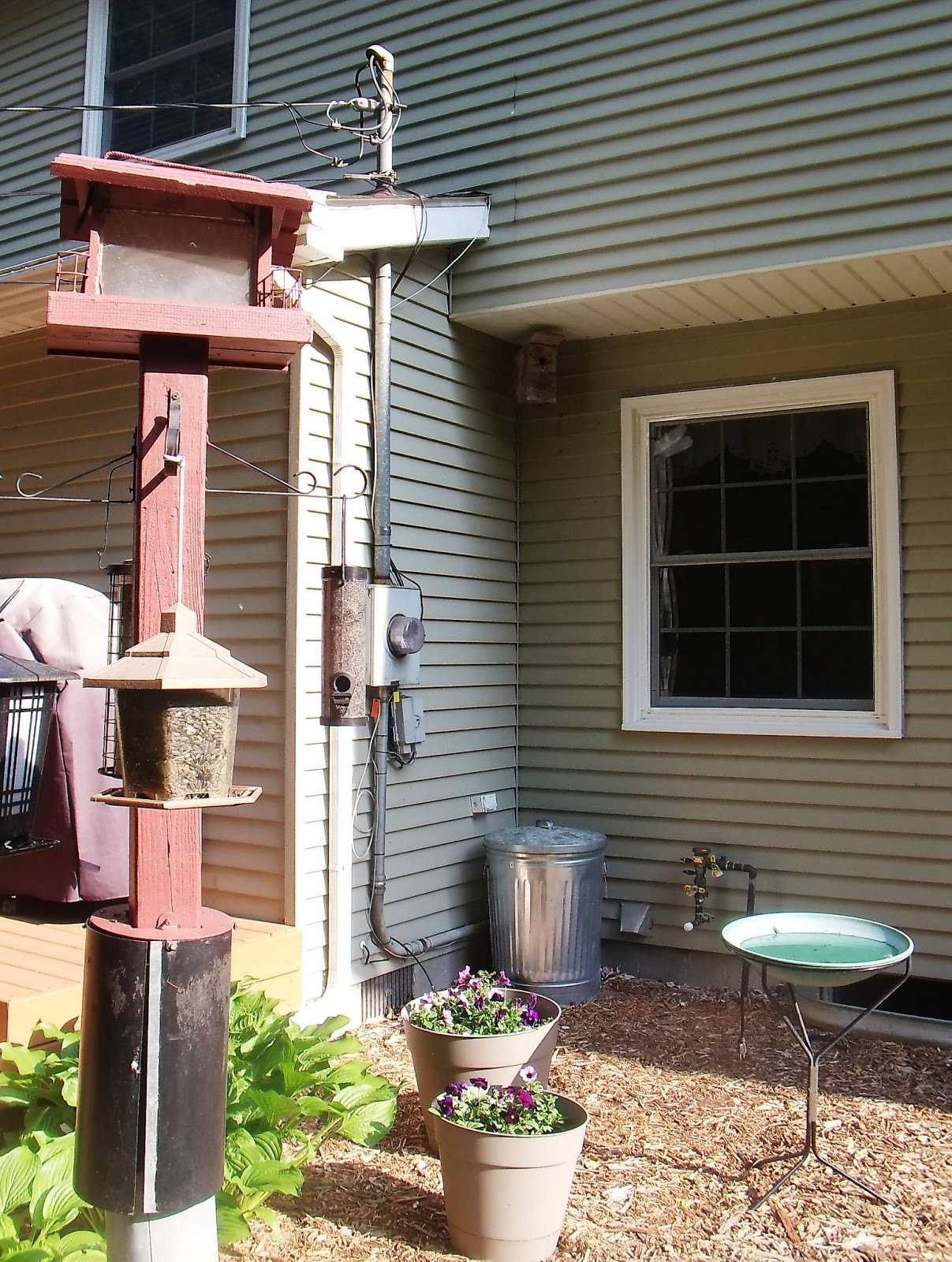
Can you spot the bird house? :-)
By Jody Hedlund, @JodyHedlund

We have a bird house hanging right outside our kitchen window. My husband built it with my son long ago, and they hung it up with pride and expectation.

For many years the bird house carried a vacancy sign . . . until finally a family of house sparrows decided to take up residence. Now they're the lucky owners of the best bird house in town. Their home is snug in a corner, sheltered from wind and rain. And right outside their tiny door is a heated bird bath and half a dozen feeders. What more could a bird ask for?

For a few weeks we watched the momma and daddy sparrow squeeze dead grass and dried weeds into their doorway as they slowly crafted their nest. Then when all of the fluttering in and out finally stopped, we decided momma bird was probably sitting on her nest.

Not many days later when we opened our kitchen window, we heard a chorus of cheeps. The daddy flitted back and forth from the feeders to his home. Every time he reached the doorway, the newly hatched babies inside would chirp with excitement.

As we watched, we were amazed at the amount of work those babies required! The daddy and eventually the momma spent most of their time flying back and forth feeding and nurturing their babies. As the creatures grew, they would pop their heads out the door and open their beaks wide, clamoring for even more nourishment.

After a week or two of constant tweeting and fluttering outside our window, suddenly one day, we awoke to silence and stillness. The birds were gone, already almost full size, ready to survive on their own.

We as writers have a lot in common with the birds! 

Most of us spend weeks building the nest–researching, plotting, and developing characters. Then we spend an inordinate amount of work nurturing our stories and crafting them with loving dedication during the first draft, just like the momma and daddy birds. Finally we help them mature with edit after edit.

But how do we know when we should push them from the nest into the wide world of agents, editors, or self-publishing? After all, we DO eventually have to let them try their wings. We can't hold them in the birdhouse forever.

How do we know when our books are ready to fly?

Over the years, I've heard many writers lament about sending their books out too soon. Agents often remark that one of the top reasons for sending a rejection is because the writing ability is not strong enough. And over the past year or so, I've read articles written by self-published authors who regret launching their books before they were ready.

Recently, I cleaned out a closet and came across the first five novels I wrote. All it took was one glance at the first page of my first one to see large paragraphs of backstory dump and setting description to know that baby had never been ready to fly. Thankfully, I never pushed it out.

With each book I wrote, I continued to study the craft of writing. And with each book, I continued to practice all of the things I was learning. But none of the books ever reached a truly mature stage. They were all just part of the necessary process of growing.

Sometimes we can do everything possible to nurture our writing, read all the writing craft books, take online courses, attend writing conferences. But ultimately, even with all of the food we shove at our writing, growth is slow and happens over time. We, like birds, have a growth curve, can only ingest so much at one time, and have to allow for a natural progression.

Maturation in our writing is not something we can rush. After all the hard work, it's easy to get excited about the next stage–seeing our babies fly. But it hurts when we push them out only to see them fall flat, get stepped on and rejected, or garner poor reviews.

So how do we know when our writing is ready to fly?

Here's my short checklist:

1. Know the techniques of writing inside and out. Make sure we have a well-crafted story that applies all of the various writing essentials.

2. Nurture our story-telling skills. Read lots of books in our genre. Spend time analyzing what makes a story work and what doesn't.

3. Allow practice to mature us. Write a couple of books to completion. There's nothing like writing a book from start to finish several times to help us grow.

4. Send a manuscript to a critique partner /group or professional editor. Good feedback from a skilled writer/editor can help us see how we're doing. Sometimes entering a contest can give us an idea of where we stack up against our competition.

5. Make a trial run. Send a query to an agent or publisher. Garnering their interest can often show that we're on track. On the flip side, however, a rejection doesn't mean we're terrible. It's often difficult to distinguish if a rejection means we're not ready or if the agent simply wasn't interested (for a hundred and one various reasons).

What do you think? Have you ever sent your work out too soon? How do you know when your work is ready to fly? 
© All the articles in this blog are copyrighted and may not be used without prior written consent from the author. You may quote without permission if you give proper credit and links. Thank you!