Blog

Showing posts with label Pinterest. Show all posts

5 Easy Tips for Driving Pinterest Traffic to Your Author Blog or Website


By Jody Hedlund, @JodyHedlund

Over the past two years Pinterest has become the number one source of traffic to my blog. In fact, when I wade through my blog statistics, Pinterest comprises over half of my traffic source now (more than twitter, google searches, etc.). Not only that, but even though I post less (only once a week on Tuesdays), my monthly page views continue to escalate.

I'm not a Pinterest expert by any means. Everything I've learned about Pinterest has come by trial and error. But over the past several years of using Pinterest regularly, I've realized that there are a few things that authors can do to maximize Pinterest in drawing traffic back to our blogs and websites.

No, I don't have a Pinterest business account. I still use my personal Pinterest account with my author hat on in an attempt to engage with readers as well as other writers. I have boards specifically for readers (boards about my novels as well as reading-related boards). And then I have boards for writers (including boards with writing and editing tips, writing humor, advice, etc.).

In fact, almost everything I pin on Pinterest is related in some way to being an author. I've decided to steer clear of more personal boards like my Christmas wish list, bathroom decorating ideas, ways to use empty toilet paper tubes, etc. Not that there's anything wrong with having those kinds of boards. I've just chosen to make Pinterest all about readers and writers instead.

With that specific focus, I've also attempted to make it as easy as possible for Pinterest users to discover more about me by clicking through to my blog and website. Here are a number of ways that I drive Pinterest users back to my cyber home:

1. Create your own Pins. Whether you use pictures from free sites (that allow for modification) or use pictures you take for yourself, it's VERY easy to create Pins. A person doesn't have to be a graphic designer to do it. There are free user-friendly sites for creating graphics (like Pic Monkey).

2. Make sure your graphics are Pinterest-friendly. If you spend any amount of time on Pinterest, you'll notice some Pins that grab your attention and others that you hardly notice. I've learned that vertical graphics tend to show up better on Pinterest while horizontal end up being much smaller and difficult to see. Font, color, and clarity are all important considerations as well. I have a secret board where I can pin graphics to see how they turn out before they go live.

3. Put your website address on every Pin. If you make the graphic, then claim it as yours. Put your stamp on it so that no matter where it goes in cyberland, the Pin always points back to you and your website. Also don't forget to put your website address into the Pin's description. Then anyone who clicks on the picture on Pinterest will be automatically taken to your Pin's landing spot on your website.

4. Make your Pins searchable. Pinterest has a search capability where a user can type in key words and pull up related boards or Pins. If you want your pins or boards to come up in other people's searches, then you need to use key words in your boards and with your pins. For example, if you have a board with funny reading pictures you wouldn't want to label it "Tickles My Funny Bone" even if that's true because that's not likely to come up in a search for reading related pins. Instead you would want to include words like reading, funny, or humor. My board is simply labeled, "Reading Humor."

5. Put your Pins on your website and blog (and not just on Pinterest). I make a least one graphic to go with every blog post. Then blog readers can pin directly from my blog to their Pinterest boards. I also have pinnable graphics throughout my website on various pages. I even have a slide show on my Reader Page for all of the reading-related pins I develop. All of those pins make my website attractive for Pinners, a place they can come and find lots of Pin-worthy graphics.

What about YOU? Are you finding strategic ways to use Pinterest to drive traffic to your blog or website? 
4 Ways Authors Can Reach Readers on Pinterest


By Jody Hedlund, @JodyHedlund

If you haven't figured out by now, I'm a HUGE Pinterest fan! I love the visual appeal of all the pictures. I love the organizational structure of the site. I love all of my various collections of pins (especially my chocolate recipes!).

Most of all, I love the venue it provides for interacting with readers.

As I've studied and experimented with Pinterest over the past couple of years, I've realized that there are many ways for authors to relate to readers on the site. Here are four simple ways:

1. Share the love of reading. 


One of the best ways to connect with readers is to promote books. There are LOTS of different ways to do that. Some users have boards that showcase their favorite books which can draw like-minded readers (via searches).

Others (like myself), have boards that relate to reading in general. For example I have boards for pins that have Reading Humor, Fascinating Book Art, Stuff for a Book Geek, and more. Such boards attract others who have the same interest. When they visit one board, they're likely to browse some of my other boards that promote reading. And while visiting, they're bound to see my Novel Boards, which leads to the next simple way to connect with readers . . .

2. Develop Novel Boards for your books. 
 

Whenever I have a new book release, I also create a Pinterest board that gives a visual summary of the book. I showcase characters, setting, historical events, etc. And within the description of the picture, I share a little bit about the story (without giving too much away). For an example of how I set up a Novel Board, check out the board for my latest release: Captured by Love.

3. Make Pinterest-worthy pins for your website or blog. 

I try to make a pin to go with every blog that I post. I also make pins for book releases, giveaways, or anything else worth mentioning. I use PicMonkey to doctor pictures I've taken or pictures that are "free" for doctoring.

Of course, I make sure to add my website address to each pin so that no matter where the pin ends up on Pinterest (even if the link back to my site is lost somewhere along the way), at least my web address is still visible. Ultimately, I want to draw people back to my website or blog to find out more about me and my books.

4. Develop topical boards that showcase elements in your books.


For example, if your book is set in World War II, consider having boards that have various pins from that era. Or if you write about lighthouses (like I am with my upcoming series), then develop a board devoted to lighthouses.

When other Pinterest users search for World War II or lighthouse pictures, they could end up being directed to your board and thus your site where of course then they'll see that you write novels about that particular topic as well.

My Summary: Pinterest is a visually stimulating way to connect with others. But I offer a word of caution: Make sure that you don't over-promote your books. As with any social media site, your followers will feel spammed if they see you pinning pictures of your books over and over and over.

Readers can sense when we're using social media with ulterior motives and they tend to run far away from pushy authors. Instead we need to join in the fun of creating interesting boards that not only will bring us pleasure, but will also be attractive to others.

Do you use Pinterest? What are some other ways you try to connect with readers there?

What I've Learned From Trying New Recipes on Pinterest


By Jody Hedlund, @JodyHedlund

As you know by now, I really love Pinterest.

One of my favorite things about it are the pictures of desserts that I find. (Here's my board of chocolate desserts!) Ever since I joined Pinterest, I've ended up trying new recipes and baking more often. There's something about seeing the beautiful picture of the ooey-gooey dessert that tempts and taunts me.

The pins of those desserts are literally picture-perfect. And so of course, that also leads me into believing the dessert can't be anything less than perfect either.

One thing I've come to realize in trying all those recipes is that it often takes trying several recipes before I finally find one I really like. In other words, not all the pictures live up to the glamorous enrapturing vision I had of the dessert.

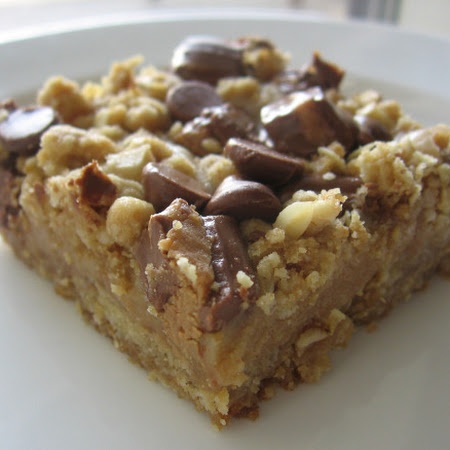
For example, I made these Peanut Butter Oatmeal Dream Bars. The bars look yummy and the recipe easy. But when all was said and done, they didn't meet my expectation. They were just okay (although my kids finished the pan in less than twenty-four hours–but that's nothing new!).
 
I also made this Starbucks Chocolate Cinnamon Bread. While I normally love any baked good from Starbucks, I immediately had an "uh-oh" moment when I pulled the bread out of the oven. The sugary layer on top had made the bread crumbly, and it didn't taste like anything I'd ever eaten at Starbucks.

I always have to wade through several dud recipes before landing upon one that I finally print out and add to my "must keep" binder.

One of my keepers is this Sour Cream Pumpkin Bundt Cake. It's soft, moist, flavorful, and best of all not too hard to make. (In fact, I just made it again last night and it was wonderful! Although my frosting ran all over the place unlike the picture!)

So what's the main lesson I've learned from all my Pinterest recipe-hopping?

Don't be afraid to try new things. Yes, we may end up a few false gems in the mix. But we won't find the real diamonds unless we're willing to try the NEW.

Of course, this lesson can also be applied to books! With so many authors out there, it's easy to stick with the few we know will deliver the kinds of stories we like. Often we're a lot less willing to try a debut author or new-to-us author for fear of what we'll get (as I mentioned in this post: What Makes Me Pick Up the Book of a Debut Author).

But over the past couple of years, I've begun to experiment with a wider variety of reading, different genres and new authors. Part of it has come as a result of trying to stay abreast of what my teens are reading. And the other part is because I've wanted to grow as a writer, to challenge myself to read popular books in order to discover what's made them successful.

In trying new books, I've come across some duds. But I've also discovered some that I've really enjoyed, books I wouldn't have read if I hadn't been flexible or daring.

Every day there are more and more books available. There are more genres, more authors, more choices for readers. And while it's overwhelming to browse through the immense number of books available, it's also an exciting time to have such a wide variety at our fingertips.

We as readers have to take the bold step forward and TRY NEW BOOKS. We can't be afraid and cling only to our tried and true authors. We also can't let the false gems we encounter derail us and keep us from our experimenting, because we never know when we may land upon a diamond in the process.

How about you? Are you brave enough to try new recipes you find on Pinterest or other places online? What about with books? How daring are you with trying new authors?
***********************************************************
Congratulations to Beth Bulow, the winner of my "I Love My Readers 5 Book Giveaway." Thank you to everyone for participating in the giveaway! I loved hearing from so many readers! Stay tuned for another giveaway in the future!

Giving Readers Novel-Boards on Pinterest

Image Source
By Jody Hedlund, @JodyHedlund

I adore Pinterest!

There's just something about seeing pictures that pulls me in. And that's really what Pinterest is all about. Pictures.

Think of Pinterest as a giant, unending virtual pin board. There are pins (pictures) of everything you could ever imagine. If you ever need help with wedding planning ideas, you'll find more than enough pins. And if you're bored (ha-ha!) and need ideas for how to make good use of mason canning jars, well, there are even pins for that.

As a writer, I love being able to have online pin boards of things that relate to me as an author. I've tried to shy away from making Pinterest an eclectic mixture of my personal tastes. And have chosen to focus instead on the things that define ME as an AUTHOR.

Therefore, if you browse my boards, you'll see that I have boards about reading, writing, inspiration, creativity, dream writing spaces, and even fabulous bookshelves.

As a mother of five, I also have several boards that relate to reading with my kids as well as teaching children to write.

I have boards dedicated to coffee and chocolate which everyone knows is the most important fuel of the writerly life. *wink*

I have a board displaying pictures of my readers (so make sure to send me YOUR picture!). And I have a board for romance (since that relates to the types of novels I write).

And finally, I have boards for each of the novels I've written.

Here's where I stop and preach to my fellow writers for just a minute. Pinterest is NOT a place to spam our books to our followers. Just like any other social media, our followers will gag if all we do is promote our books (and after gagging, they'll promptly unfollow us).

However, I don't think having novel-boards on Pinterest is spam. In fact, I think novel-boards are actually one of the coolest things EVER.

What are novel-boards?

Basically, they're boards that summarize the characters and events in a novel via pictures and snippets below each picture. (I also make sure to put the book blurb at the top of the board and make it clear that the board is a novel-board by using the word Novel in the title of the board.)

Novel boards are a great way to tease readers before they read the book.
For example, I have a board of pins put together for my upcoming release, A Noble Groom. I use the pictures to briefly tell the sequence of the story and give the readers some ideas of what takes place in the book.

The pins are hopefully a way to intrigue a would-be reader, to get them interested, even excited about the story.

But the novel boards can also be a place readers can go after finishing the book. Often if a book really resonates with a reader, they'll search out the author's website and want to learn a little bit more about the author and book.

If you'll notice a section of each of my Pinterest novel-boards is on my Reader Page. From there, readers can easily click on the link and delve further into each book via the historical photos, character likenesses, and extra resources.

Of course my novel boards aren't perfect. It's not always easy to find pins to match the story. And it's also challenging to get them in story order (since Pinterest still doesn't allow you to re-position pins on individual boards once you've pinned them).

But I'm also learning that with each book I write (while I'm in first draft mode), to bookmark pictures and even pin some onto one of my Secret Boards, so that I have them closer to the book release when I begin putting the board together.

So, dear readers, I encourage you to take a look at my A Noble Groom board. Let me know what you think! Does looking at the pictures spark your attention in the story? And what do you think of this fabulous pin developed by my publisher? Isn't it fun!?!


What do YOU think of Pinterest? Are you using it, and if so what do you like best about it? Do pictures speak louder than a thousand words for you?

Why Writers Need to Seriously Consider Pinterest


I wasn’t planning to write a post about Pinterest. But after hearing some grumbling about this up-and-coming social media site, I felt compelled to share my evolving thoughts about it.

I know writers fear over-commitment to social media. We’re already stretched thin between Twitter, Facebook, Google+, LinkedIn, Goodreads, Tumblr, and Blogging.

“I just don’t have the time to add one more thing,” I’ve heard plenty of writers say.

I’m a tad busy too. But I’m making the time for Pinterest. In fact, if need be, I’ll subtract a little bit of time from some of the other social media sites so that I can interact on Pinterest.

Here are several reasons why I think Pinterest is important for writers:

Pinterest isn’t a passing fad. Last week I read an infographic by TalkingFinger. Here are just a few statistics the infographic cited about Pinterest that show how important it’s becoming:

• It has 1.36 million users DAILY.
• It generates more traffic to websites than Google+, LinkedIn, and YouTube combined.
• There is a 145% daily user increase since the beginning of 2012.
• Over one-fifth of connected Facebook users are on Pinterest daily (which amounts to over 2 million people).

And here's another insightful infographic: Interest in Pinterest Reaches a Fever Pitch.

Pinterest provides key visual stimuli. I personally think that visuals attract people to our products more than any other type of marketing. Pictures are engaging, spark interest, and draw attention. In our culture of short-attention spans, the quick visual is sometimes all the time we have to garner someone’s interest. Just last week I was attracted to two different books as a result of pins on Pinterest. I’m sure if those pins grabbed my attention, they did others as well.

A recent study shows that Pinterest drives more revenue per click than Twitter or Facebook. The study said: "Pinterest is the first social network that’s delivering not only lots of traffic but also real revenue and lots of new customers."

Pinterest puts us into contact with more people than our followers. Currently with the way Pinterest is set up, every time you pin something that is “categorized” it will show up in that particular category under the “Everything” list which anyone can access. That means your pin has the potential to reach more than your followers. In fact, it can go viral. One of my inspirational pins got over 200 repins mostly by non-followers.

Pinterest allows us to connect with readers in a unique way. I connect with writers and industry professionals through Twitter and Blogging. But I’ve connected with readers mostly on Facebook. And since Pinterest is a female dominated site (so far 68.2% of Pinterest users are women), I have no doubt a large majority of my readers (women) will gravitate there at some point in the near future if they’re not already there. I want to be there waiting to welcome them.

On Pinterest, readers will get a better picture of my interests as well as my books (through my story boards). Recently, one follower on Pinterest said she decided to read my book as a result of my active presence on Pinterest. (Read what she said here.)

My summary:

For those who are dragging their feet about joining a new social media site, just remember the hesitancies you had with Twitter or that Facebook Page when you first started. They seemed a little intimidating at first, and you didn’t really “get” the point of them.

But once you jumped in and tried them, they began to grow on you, right?

It’s the same with Pinterest. Don’t let fear or other excuses stop you. As modern writers, we have to stay flexible and willing to change with the times.

Pinterest is only growing in popularity every day. Once you take part in the pinning fun, you’ll begin to see why it’s becoming so popular. And you’ll realize what a valuable new tool it can be to add to your writer’s toolbox.

Several cautions:

Pinterest is NOT a place to spam our books. Like any of the social media sites, Pinterest is SOCIAL. It works best if we pin/repin a variety of pictures that can entertain, encourage, and inspire others.

Pinterest needs to reflect YOU. One of the coolest things about Pinterest is that you can tailor your site to reflect your BRAND and who you are as a writer. For example, my boards display not only my novels, but also my love of writing, reading, coffee, and chocolate. I invite you to take a look and get some ideas from what I'm doing. But you shouldn't try to imitate me or anyone else. Figure out your brand and what is uniquely YOU.

Pinterest also needs to be for our readers. While it’s fun to have all kinds of random boards of things we like (i.e. hairstyles, kitchen remodeling,etc.), we need to keep the primary focus on having boards and pins that will appeal to our consumers. I think Random House and Penguin Books do a fabulous job with their boards. Both are promoting their books but at the same time appealing to their target audience in creative ways.

So, if you’re not using Pinterest, did I convince you of its worth? *grin* If not, why not? What’s holding you back? If you’re using Pinterest, what are some things you’ve learned about the site that can help other writers who are getting started on it?

*Image via: 18 stats to sell your boss on Pinterest

We're working on fixing my broken retweet button. In the meantime, feel free to share this post using the following button:


© All the articles in this blog are copyrighted and may not be used without prior written consent from the author. You may quote without permission if you give proper credit and links. Thank you!